
The term “ancient Silk Roads” conventionally refers to the historical networks of trade routes spanning West, East, Central, and South Asia, connecting with the Mediterranean World. However, the phrasing of “Silk Roads” has been considered problematic by some, as it tends to overemphasise the economic significance of silk along these trade routes while overshadowing other crucial elements such as various commodities, arts, religions, culture, and the exchange of people, all of which played vibrant roles in this historical network (Williams 2015, 1-2). Recent discussions and projects, such as the Nara to Norwich initiative by the Sainsbury Institute, challenge the traditional notion of the Silk Roads as a mere link between two major powers, ancient Rome and China.
Exhibitions with the theme of Silk Roads take various forms, each significantly influencing how audiences perceive these ancient routes. Given the vast geographical and temporal scope of the Silk Roads, it is often challenging to encompass all essential elements and aspects within a single exhibition. Some exhibitions opt to focus on specific themes, delving deeper into subjects like the life and material culture of ancient merchants, as seen in The Sogdians: Influencers on the Silk Roads, or they concentrate on particular sites, such as the Buddhist rock-cut temples in Dunhuang.
During the pandemic, many museums faced restrictions on normal operations, making it difficult for visitors to access physical exhibitions. Consequently, online exhibitions gained popularity as a viable alternative for displaying objects and narratives. Advancements in technology have made it possible to virtually showcase the wonders of the ancient Silk Roads, granting people worldwide access to its rich history, diverse cultures, and influential trade routes. This article aims to explore some of these exhibitions, highlighting the importance, challenges, and innovative approaches involved.
Virtual exhibitions hold significance in several ways. They can be accessed by anyone with an internet connection, breaking down geographical barriers and allowing individuals from different parts of the world to explore and rediscover the history and heritage of the Silk Roads. This fosters cultural understanding and appreciation, which can be especially important in preserving sites and artefacts by reducing physical contact while simultaneously making them accessible to the public. Yet, virtual exhibitions may somehow disconnect visitors from the actual objects and affect their viewing experiences, when digital culture is overemphasised – this was discussed by Elizabeth Lee in her post on The Digital Orientalist in 2021.
Take, for example, the impact of tourism on the Mogao Grottoes in Dunhuang, Gansu Province, China. Over the years, the site’s popularity led to a significant increase in annual visitors, from 26,000 since its opening in 1979 to more than 1.35 million in 2016 (Li 2018, 47). Unfortunately, this surge in tourism resulted in the deterioration of murals due to prolonged opening of cave doors and high air exchange rates, especially during peak seasons (Chen et al. 2017, 15-17). To alleviate these issues, an online exhibition project called Digital Dunhuang was established, allowing visitors to preview the popular caves and interact with them before and after their physical visit. For more on this, see Alice Casalini’s recent post on The Digital Orientalist, featuring an interview with Dr Zhenru Zhou on Digital Architecture in Dunhuang.
Furthermore, virtual exhibitions serve as valuable educational tools, making history and culture more engaging and accessible. They can be used by schools, universities, and educators to supplement traditional teaching methods, as well as by scholars for research and analysis. Below are some online exhibitions under the theme of Silk Road studies, which I have used during my own research process:
1. Dunhuang Caves on the Silk Roads (link)

Current exhibits include: “Stories Behind the Dunhuang Caves,” “The Library Cave and Dunhuang Manuscripts,” and “Conservation and the Future of Dunhuang.” This project is a collaborative effort between the UW Tateuchi East Asia Library, the Dunhuang Foundation, and the Dunhuang Academy. The exhibitions are presented in article format, accompanied by detailed images and maps in both English and Chinese, with the aim of reaching a broad audience, including high school and undergraduate students.
2. The Sogdians: Influencers on the Silk Roads (link)

This digital exhibition, organised by the Freer Gallery of Art and Arthur M. Sackler Gallery at the Smithsonian Institution, explores the art and material culture of the Sogdians, a prominent group of merchants along the ancient Silk Roads. It focuses on the golden age of the Sogdians, from the 4th to 8th centuries CE, showcasing wall paintings, textiles, metalwork, sculptures, and more. The exhibition is divided into five sections, each providing insights into different aspects of Sogdian culture, and includes object photos, manuscript scans, archaeological maps, expert interviews, archival footage, and interactive 3D object models.
3. Nara to Norwich (link)
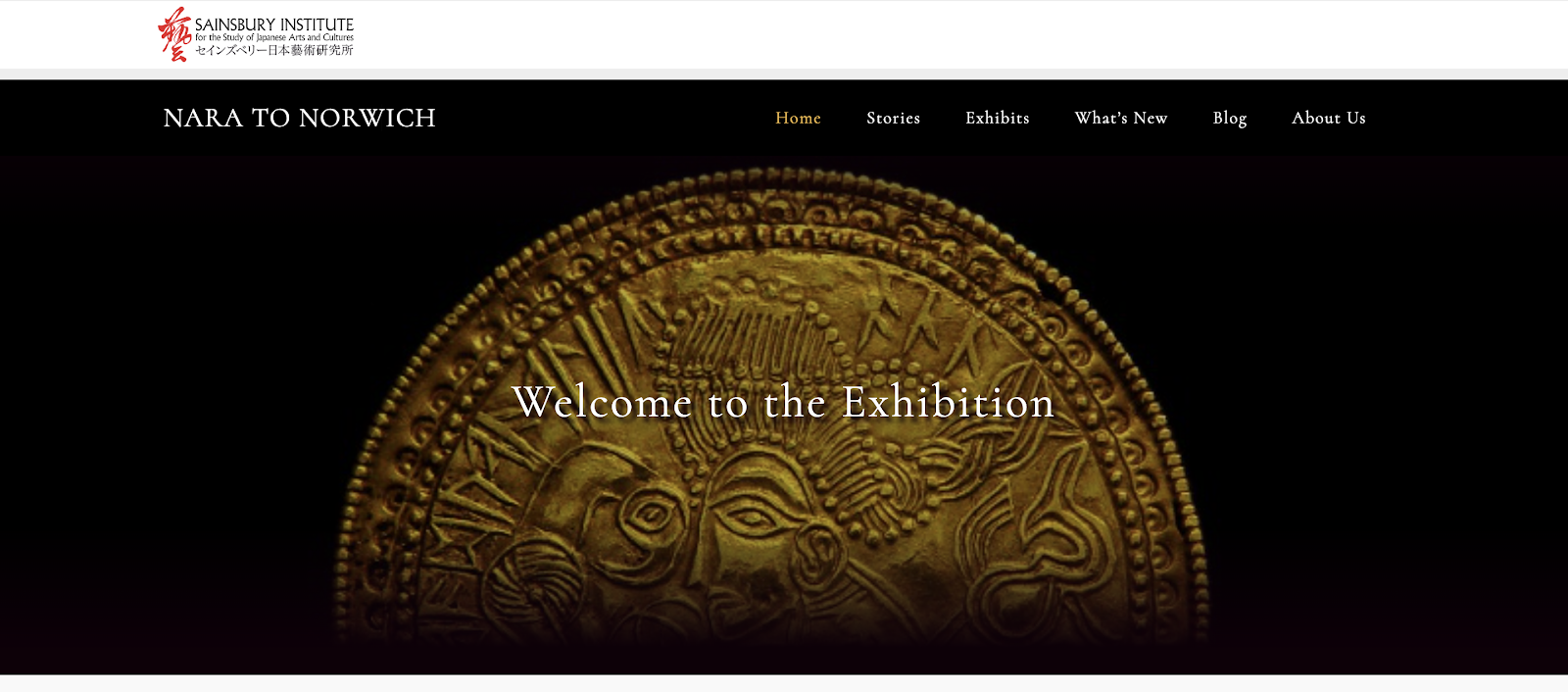
Nara to Norwich, established by the Sainsbury Institute for the Study of Japanese Arts and Cultures, is an international research project that was initially planned to be a physical exhibition held at the Sainsbury Centre on the Campus of the University of East Anglia (UEA) in Norwich. However, the exhibition was moved online due to the pandemic. It focuses on the interaction between early Buddhism in East Asia and early Christianity by the North Sea, providing a unique perspective on the Silk Roads. The exhibition displays various finds from Gandhara, Japan, Britain, and Sweden, including schist panels, sculptures, crosses, reliquaries, manuscripts, and architectural elements like stupas and chapels.
4. China National Silk Museum (link)
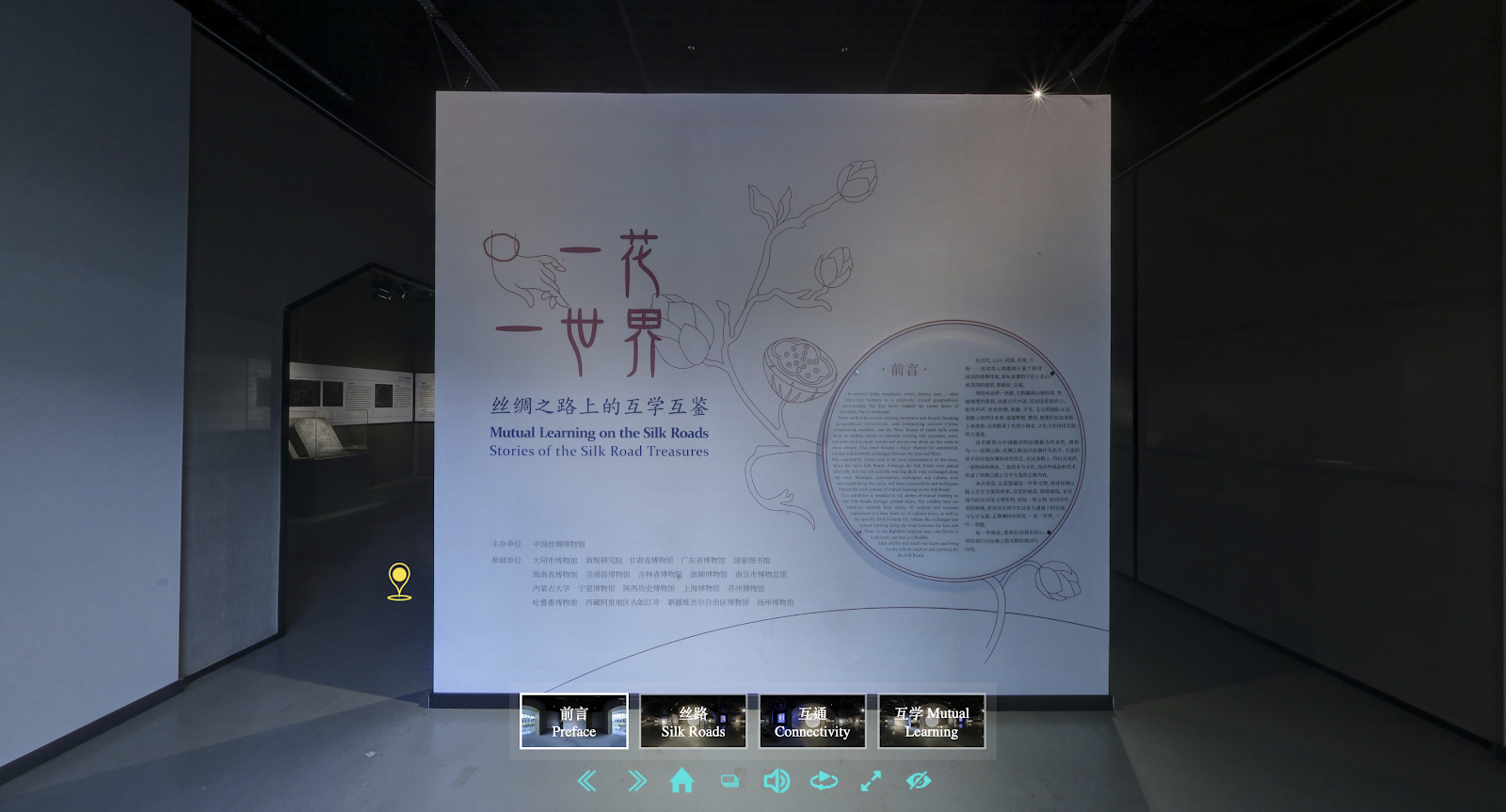
The China National Silk Museum features over 20 digitised exhibitions on their website, available in both Chinese and English. For example, Mutual Learning on the Silk Roads – Stories of the Silk Roads Treasures, presents objects from various archaeological sites along the ancient Silk Roads. Instead of merely showcasing objects and texts on a webpage, this exhibition offers a 3D space model of a physical exhibition curated in the museum. Visitors can virtually navigate through the exhibition, view display cases at different sections, and access object details and related text panels. This immersive approach, while lacking detailed object views, provides an interactive experience akin to visiting a physical exhibition.
5. Digital Dunhuang (link)

Digital Dunhuang offers virtual tours of the Mogao Grottoes and Yulin Grottoes in Dunhuang, featuring 30 digitised cave sites. This project serves as a digital repository of these significant Buddhist rock-cut temples, curated by the Dunhuang Academy. Visitors can virtually explore each cave, accessing high-quality mural paintings with detailed explanations of their historical, religious, and pictorial significance. The interactive cave models allow users to move within and between caves, providing access to otherwise unreachable areas. This technology has also facilitated research on Buddhist rock-cut temple architecture and mural paintings, offering scholars detailed digital models for study.
In summary, there are various types and styles of virtual exhibitions that tell the story of the ancient Silk Roads. Given the vastness of the Silk Roads in terms of geography and time, online exhibitions have the potential to include a wider variety of objects and topics with the assistance of technology. Curating Silk Roads exhibitions has always been a challenge due to the dispersion of artefacts worldwide, for example, the mural paintings of Kizil Caves and the manuscripts from Mogao Cave 17 are now dispersed across the UK, France, Russia, Germany, US, Japan and China. Could the development of online exhibitions be a solution to curating Silk Roads collections?
Additionally, other technologies such as Virtual Reality (VR) and Augmented Reality (AR) can enhance these virtual exhibitions, creating immersive experiences within Silk Road cultural heritage. With VR, visitors can virtually stroll through historical sites and bustling marketplaces, while AR allows them to access archaeological sites from the comfort of their homes using their smartphones. As technology continues to evolve, our definition of “virtual” is flexible and dynamic, just as the ancient Silk Roads were once dynamic, vivid, and vibrant. Curating “virtual” Silk Roads today, then, can be equally flexible, creative, and effective.
References
H. Chen, G. Chen, N. Agnew, M. Demas, P. Xue, W. Hou, B. Su, S. Meakawa, X. Wang, “The impact of visitation on the microenvironment of the Mogao Caves”, Sciences of conservation & archaeology 29, no. 6 (2017): 10-17.
P. Li, “The construction and practice of a new tour pattern at the Mogao Grottoes”, Dunhuang Research 168, no.2 (2018): 47-50.
T. Williams, “Mapping the Silk Roads”, in The Silk Road: interwoven history. Vol. 1, Long-distance trade, culture, and society, ed. M.N. Walter, & J.P. Ito-Adler (Cambridge: Cambridge Institutes Press, 2015), 1-42.

 The Digital Orientalist
2 thoughts on “Exhibiting the Ancient Silk Roads Virtually”