
The Himalayan region has consistently been the subject of various external imaginations. For example, since the publication of James Hilton’s Lost Horizon in 1933, Shangri-La has emerged as a dominant, albeit Orientalist and romanticised, representation of this area. In the modern digital era, the nature of these imaginings has evolved beyond textual constraints, allowing the democratisation of knowledge creation, now more accessible to the general populace. Within the contemporary Nepal-China contact zone, vlogs by Chinese creators depicting their purportedly authentic travel experiences in Nepal are becoming increasingly influential as a source of information about this Himalayan nation. These vlogs, however, are generally treated as low-end, even vulgar consumption materials with their role as informal, alternative knowledge production being overlooked.
My doctoral research in Trans-Himalayan Studies, with a specific focus on Nepal, incorporated an analysis of these Nepal-centric vlogs disseminated online by Chinese vloggers. Initially, my interest lay in conducting a semiotic examination of Nepal’s portrayal in these modern online Chinese cultural expressions. However, a more extensive and in-depth analysis revealed that a purely representational approach was inadequate to expose the nuanced complexity of vlogs and their prosumers. Questions emerged: Despite the diversity of vloggers, why do the narratives of these vlogs consistently portray Nepal as one of the world’s most economically challenged countries, imbued with notions of exoticism, underdevelopment, and a lack of modernity? What drives the active engagement with vlogging about Nepal? Furthermore, what are the trajectories of these vlogs and their creators? These inquiries compelled me to adopt a contextualised, multimodal methodology in my study of vlogs, leading to a reconceptualisation of them as mediums for knowledge production and action. This paradigm shift has also invigorated my aspiration to reimagine the interplay between research, teaching, publication, and public engagement in my future academic endeavours.
What is Vlogging?
For those unfamiliar with the term, it is essential to offer a succinct introduction to vlogging, contextualising it within the prevailing academic discourse surrounding social media and multimodality. Vlogging, an abbreviation of ‘video blogging’, transcends being a mere digital analogue of traditional text-based blogs. As Burgess and Green astutely point out, vlogs are primarily characterised by monologic narratives delivered directly to the camera, typically requiring minimal technical sophistication and often composed with limited editing.
The emergence of technological innovations, such as smartphones and the internet, has significantly blurred traditional cultural distinctions between private and public spheres, proximity and distance, individual and collective experiences, and the dichotomy of present and past. These participatory principles are inextricably woven into the cultural fabric of vlogging. Utilising advanced technologies, vlogs further obscure the lines between subjectivity and objectivity, engendering a sense of simulated authenticity. In the context of the participatory culture of Web 2.0, traditional audiences transform into co-creators or ‘prosumers’ of the content they engage with. Certain platforms even enable real-time commenting, thereby evolving the role of vlog audiences from passive viewers to active co-creators. For example, the platform Bilibili, one of the largest video-sharing platforms in China, introduces a ‘danmu’ feature, allowing users’ comments to appear as scrolling subtitles overlaid on the video.
Global vlogging practices, often centred around documenting everyday travel experiences in ‘remote’ tourist locales, manifest various forms of asymmetries linked to national, ethnic, gender, linguistic, economic, and developmental disparities. These historical and structural inequalities not only influence the visual and thematic composition of vlogs but also dictate their genesis and dissemination pathways. Hence, the examination of vlogs, alongside other cultural productions, necessitates a multimodal approach. This approach acknowledges the diverse methodologies of comprehending human experiences and promotes an ever-expanding repertoire of tools, practices, and concepts for communicating these understandings.
An Illustrative Instance
To elucidate how Nepal is depicted in contemporary Chinese vlogs, it is instructive to analyse a specific example. Such an analysis can shed light on the elements emphasised and those omitted, and provide insights into the motivations behind vlogging in Nepal. For this purpose, I have selected a vlog from my archive that has amassed the highest viewership.
The vlog in question, created by a vlogger self-identified as Daming (大明), documents a mimic dining experience at a KFC restaurant in Kathmandu, the capital city of Nepal. Daming is a professional vlogger, as branded on his account homepage, with a focus on vlogging in China’s neighbouring countries and marginalised areas within China. The title of this vlog is notably provocative: “Eating at the KFC restaurant in Nepal is not afforded by normal local people! BTW, the girl at the cashier is gorgeous!”
The content of this vlog encompasses a comprehensive depiction of the dining experience, starting from introductory dialogues outside the restaurant, proceeding with entry into the establishment, ordering at the counter, and providing an overview of the restaurant’s ambience. It also includes detailed footage of the food display and the act of consuming the meal on camera.

A vlog clip
In this vlog, a Nepali youth is featured, although the precise relationship between the youth and the vlogger remains undisclosed. Throughout their meal, Daming consistently poses questions to the young man.
“Daming (DM): KFC is considered among the upscale eateries in Kathmandu, isn’t it? The costs here are rather high, correct?
Nepali young man (N): (Nods in agreement) Yes.
DM: So, for individuals earning roughly five to six hundred (RMB yuan), dining here could be a strain, wouldn’t it?
N: They…
DM: It would be too costly for them.
N: They don’t frequent here at all.
DM: (Understandingly) They abstain from coming here.
N: So few people dine here. (N nods in agreement)”
The primary language used in Daming’s vlog is Chinese Mandarin, which is also commonly employed in the vlogs from my archive. However, a noteworthy aspect is the limited proficiency in Mandarin exhibited by the Nepali participant, impeding effective communication. Despite the apparent intent to engage in an information-exchange dialogue, the interaction skews towards Daming predominantly disseminating information, rather than receiving it. This dynamic subtly shifts the knowledge exchange, positioning Daming as the more informed party.
The vlog implicitly conveys a judgement of Nepal’s development level based on the perceived affordability of global fast-food chains like KFC for the local populace. On platforms like Bilibili, a genre has emerged that features vlogs documenting dining experiences in such establishments in non-Western regions, notably in Asian and African countries perceived as economically underdeveloped. These vlogs often follow a recurring narrative: the vlogger comments on the disparity between the high cost of these meals and the local average income. This pattern reflects a broader trend in contemporary Chinese vlogs, where the creators position themselves as observers of modernity and development in other countries. However, as this genre of ‘eating-KFC’ vlogs crystallises into a subculture, its thematic and narrative structures become increasingly rigid, with the geographical, cultural, economic, and political distinctions of the featured locations serving merely as backdrop to a uniform storyline.
The phenomenon raises questions about the motivations behind vlogging, particularly the focus on the Global South and the recurring theme of a lack of modernity. The primary incentive appears to be monetary; vlogs can generate revenue through platforms, and topics that critique the development of other regions tend to attract more viewership and, consequently, higher earnings.
Many Chinese vloggers based in Nepal come from marginalised positions within China and can be likened to modern nomads, continually moving between locations without the ability to establish stable capitals. This transient lifestyle is further pressured by the prevalent success narratives in China, highlighting the country’s development. These vloggers find themselves at a crossroads, navigating the dichotomy between their present circumstances and the anticipated prosperity promised by the Chinese state’s narrative of progress.
Their transnational mobility can be seen as both a response to and a result of their domestic constraints. Vlogging emerges as a strategy to support this nomadic existence. While physical movement and its documentation through vlogs are seen as solutions to their immobility, their ultimate destination remains uncertain. The choice of travel destinations for these vloggers is often less about a deep understanding of the host society and more about the perceived ease of access or convenience.
A Multimodal Way of Knowing and Acting
The question then arises: how can we collaboratively interpret such vlogs in a more informed manner? My initial foray into the analysis of these vlogs was marked by a critical stance, perceiving them as flawed, racialised, and discriminatory. However, I soon recognised that such moralistic critique, while valid, may not contribute significantly to research that aspires to be responsible, empathetic, and responsive to real-world needs. Whether we endorse these vlogs or not, it is imperative to acknowledge them as both a form of knowledge production and a practice of knowledge-making. They play a crucial role in shaping the understanding of Nepal and other regions among a wider, non-academic audience.
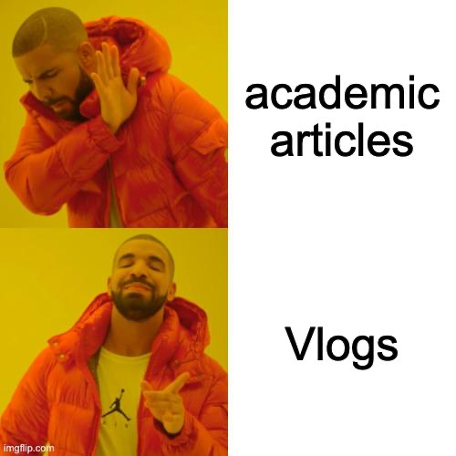
This realisation prompts a critical reassessment for contemporary scholars in Area Studies, especially those from non-Western backgrounds. We must re-evaluate our research agendas, responsibilities, and methodologies: What are the objectives of our research, and whom does it serve? Traditional Area Studies have emphasised the collection and amplification of local voices. However, the challenge extends beyond mere data collection and interpretation. How do we engage with a broader audience beyond the limited readership of academic articles and books confined to library shelves? How can our research resonate with and impact a wider demographic?
Increasingly, academic circles are recognising the value of knowledge dissemination through mediums like podcasts. In light of this evolving landscape, it may be timely to consider incorporating vlogs into our scholarly toolkit. This medium offers a unique opportunity to bridge the gap between academic research and public engagement, enabling a more inclusive and accessible approach to knowledge production and exchange.
Particularly in the field of Area Studies, there is a substantial journey ahead towards achieving such a multimodal turn. Numerous initiatives can be undertaken to facilitate this transition. Foremost among these is the need to reconceptualise the role of alternative knowledge productions, such as podcasts and vlogs, within the academic framework of Area Studies. It is imperative to elevate these mediums beyond their current perception as mere adjuncts or intriguing supplements to a scholar’s profile. Instead, they should be acknowledged as valid, and potentially semi-academic, forms of publication. This shift in perspective is essential for embracing the full spectrum of academic communication and for engaging with a diverse, global audience in a more engaged and impactful manner.

 The Digital Orientalist
One thought on “Vlogging as a Multimodal Way of Knowing and Acting: Some Reflections from the Trans-Himalayan Context”