
This guest post was written by Virgine Borges de Castilho Sacoman (UNISINOS). Learn more about her work here.
Since I completed a research project on “Japanese Pop Culture: The Otaku Concept” for my undergraduate degree in history, I realized that it is possible to learn about history through media productions. More than that, I realized that it is possible to learn, for example, from anime (animation produced in Japan). Anime is a media product of Japanese pop culture that many high school and university students love to watch. Teachers need to know the content of these anime very well, and apply techniques and practices when using them as teaching materials that facilitate the learning of history.
Selecting media productions
As a history teacher in a university setting, I realize that it is increasingly difficult to capture students’ attention due to so many advances in technology and social media. Students replace books with and prefer to research on platforms where the content is summarized, quick to digest and apparently fun. The result is an emerging generation without the patience to wait. For example, even watching a one-and-a-half-hour film has become tiring and complex for many.
In the classroom, history teachers need to speak for several minutes, and perhaps even hours, to explain a given historical event. So how can we compete in the educational field with the influence of streaming platforms, social media, and AI? One option would be to look for tools that are part of students’ daily lives and integrate these into the classroom. Anime is one sort of product that, when well selected, can contribute to the understanding of history. To do this, the teacher needs to be very familiar with the content of the narrative and select images and excerpts that are key to understanding a given historical context. Media products should not be used as an alternative to the norm, but as a practical teaching tool. All media products explored in the classroom should be accompanied by explanation, reflection and critique of the work as a whole. Another point that the history teacher should consider is the author of the work, the year of production and the target age group. The sources need to be highlighted so that students understand that anime are Japanese productions and, therefore, they will be exposed to Japanese perspectives.
In practice, before starting the class, the teacher should introduce the content by providing an explanation of the historical context and how it relates to Japanese media production. Then, they should open a space for discussion to gauge students’ prior knowledge, whether regarding the historical content or about the animation. Additionally, it is essential to assess which historical topics are appropriate and required according to educational regulations or institutional guidelines. For example, in Brazil, history education is based on three main pillars: Brazilian History, American History, and Western History. Japanese history and other Asian countries are not widely covered in Brazilian education. However, as a teacher, I feel it is my duty to go further and open a space with my students to discuss Asian history and culture. After all, Brazilian society is composed of many immigrants, and a significant portion of them are of Asian descent. Brazil has one of the largest Japanese communities in Latin America, so it is our duty as citizens to understand our people and origins, helping to prevent acts of orientalism and Othering from occurring.
Learning process in history with anime
After selecting the anime, it’s time to choose the images or videos to share in the classroom. In this article, I selected three animations: the first two involve Japanese history and culture, while the last addresses historical contexts from the Western world.
1. Samurai X and the Tokyo Saga
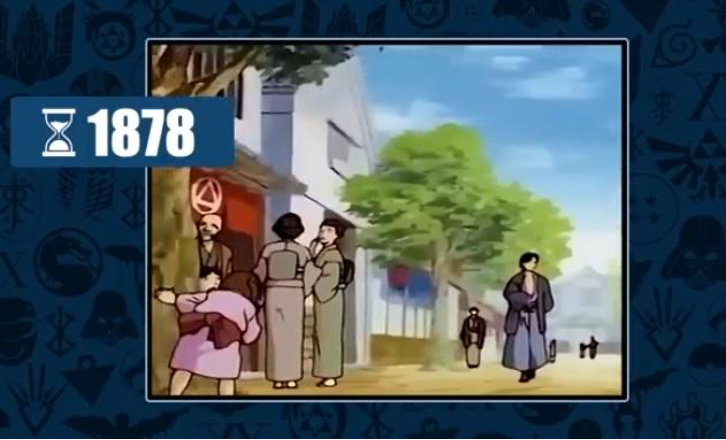
Figure 1: YouTube – Summary of Samurai X – The Tokyo Saga.
This anime can help teachers to explain the Bakumatsu period, a time when Japan ended its isolationist policy, transitioning from the feudalistic Edo period to the Meiji period. Here, the teacher can emphasize the existence of feudalism in Japan and how it differs from European feudalism. Additionally, the teacher can highlight that samurai warriors did indeed exist in Japan and that the anime accurately depicts their clothing and the historical context. However, as this is a media production and the narrative needs to be engaging to captivate the audience, it can be concluded that there are many fictional elements and characters that did not exist. For this reason, it is important for the teacher to understand that students need to develop their discernment skills, as well as scholarly maturity, to distinguish reality from fiction—an essential skill in the field of history.
In this part, teachers can use some traditional sources as pedagogical support, for example, Yamashiro’s (1987) book “The History of the Samurai”, and Deal’s (2005) book “Handbook to Life in Medieval and Early Modern Japan.” These books are complex, but teachers can select some important events captured therein and offer explanations in easier language when teaching. In my experience, when I talked about feudalism in Japan, the students immediately fixed their eyes and started mentioning other animes that have the same historical context. In the following classes, I noticed that they started to have more interest in the history content.
2. Nana
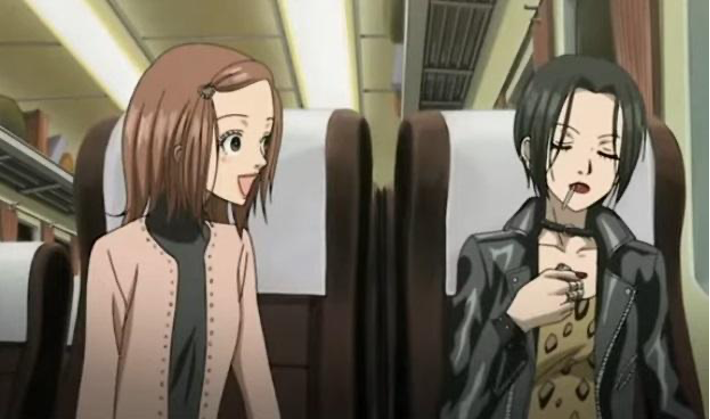
Figure 2: YouTube – Nana Episode 001 Eng Dub.
This anime follows the story of two women with the same name: Nana. They meet on a train headed to Tokyo and become friends. While Nana Komatsu (on the left) dreams of finding an ideal partner to start a family, Nana Osaki (on the right) is focused on her career. Two women with the same name but different goals that complement each other. In this animation, one could say that the characters represent Japanese society, with tradition and modernity coexisting side by side. Thus, the teacher can use this perspective in the classroom to discuss Japanese culture, particularly in relation to traditions and technological/economic development, as well as issues surrounding birth rates, education, and life perspectives.
3. The Diary of Anne Frank
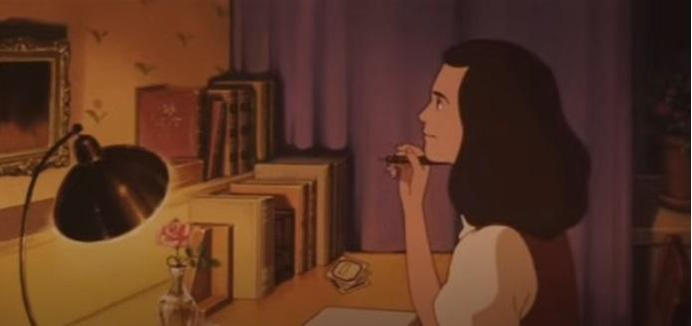
Figure 3: Youube – Anne no Nikki/アンネの日記/The Diary of Anne Frank (1995) – Full Movie.
This animation is based on the life story of Anne Frank—at thirteen years old, she recounts, in her diary, the life of a group of people hiding from the Nazi occupation in Amsterdam. On August 4, 1944, Gestapo agents detained all those in hiding in Amsterdam, taking them to various concentration camps. In this case, the teacher can suggest that students read the book to better understand the historical source. In the animation, the narrative’s atmosphere is melancholic, as Anne documents her daily life in her diary amid a chaotic context of persecution, xenophobia, and war. This perspective should be emphasized so students grasp the historical weight of the narrative. Additionally, concepts like xenophobia and Nazism can be studied in the classroom through the animation.
A key point here is that anime can be used as a resource not only for Japanese history and cultural studies, but also for other areas and histories.
Conclusion
In conclusion, although anime provide an engaging resource to study and understand history in the classroom. However, it is the teacher’s responsibility to use media productions effectively as a foundation for teaching and learning history. Another key aspect of using technology in the classroom is related to the availability and access to devices within the school environment. In other words, investment in the adoption of new technologies in educational settings, with strategies geared toward educational purposes, are essential. Finally, this approach stimulates curiosity, attention, and ignites students’ interest in understanding history. Moreover, it brings students closer to history, helping them to understand themselves as historical subjects of their time.

 The Digital Orientalist
One thought on “Education and Technology: Understanding History through Anime Productions”