
In my first Editor’s Digest, I summarised publications in The Digital Orientalist from the Middle Eastern Studies team between September 2024 and February 2025. In this edition, I briefly recapitulate those from February 2025 to February 2026.
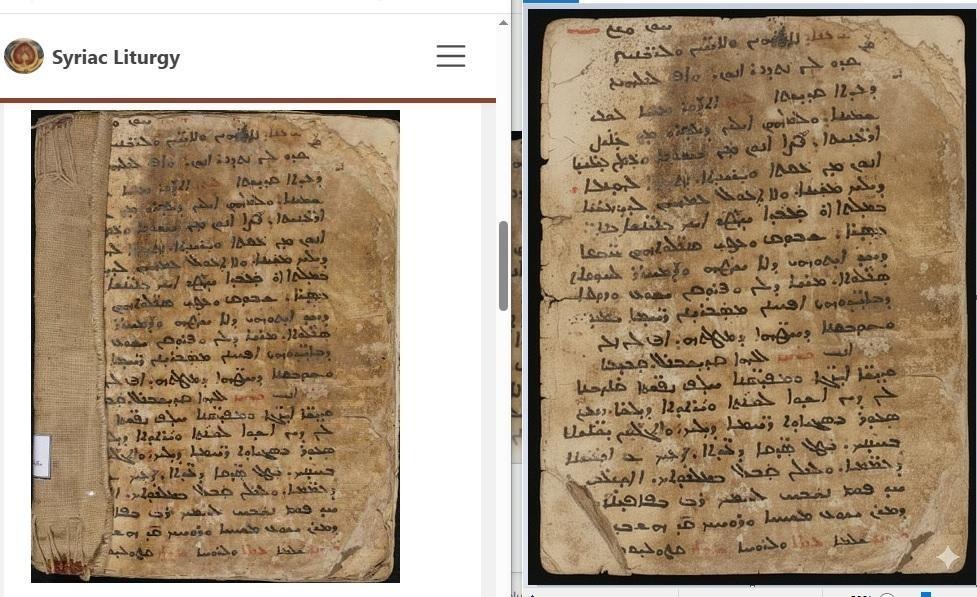
Fig. 1 The Aleppo N. 232 fragments in their current state as binding material, contrasted with the AI reconstruction (right) visualizing the completed, flat pages.
Ephrem A. Ishac continues to explore the potential applications of artificial intelligence in Syriac Studies. His post, “Syriac AI Manuscripts and Fragments: Reimagining Digitally the Damaged Past,” sheds light on the possibilities of using artificial intelligence to reconstruct damaged and fragmented Syriac manuscripts. Using two case studies, Ishac discusses both the benefits of, and the cautions required when, relying on artificial intelligence for this work.
Ishac’s more recent contribution, “Beyond Artificial Intelligence: Human Recognition of a Syriac Fragment in Turfan,” reflects on the continued importance of human insight in the field of manuscript studies. While acknowledging the potential of digital tools and artificial intelligence, he emphasizes that “human insight, informed by knowledge and experience, remains crucial […].” Ishac then discusses this methodology–which strikes a balance between human and artificial intelligence–in the context of his project, Identifying Scattered Puzzles of Syriac Liturgy, based in Vienna.
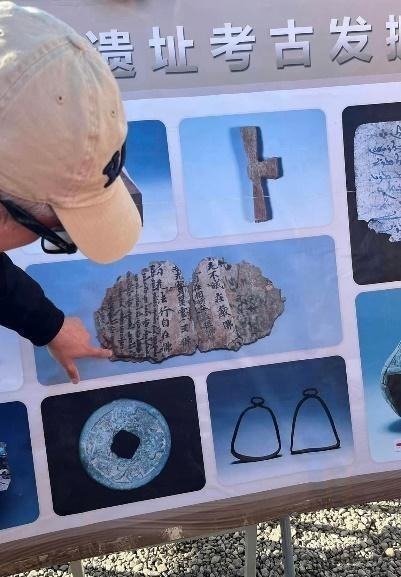
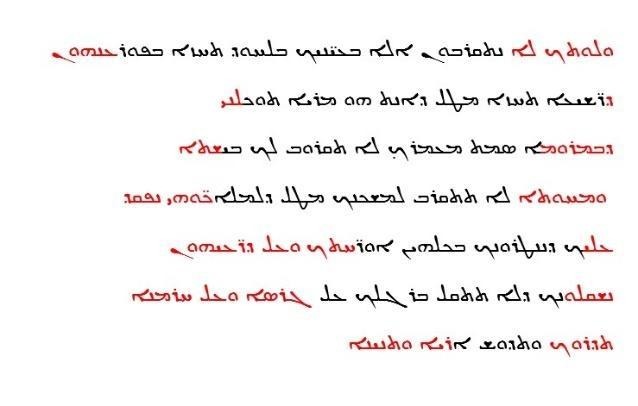
Fig. 2 Ephrem A. Ishac reading the newly discovered fragment at the Turfan excavated site.
Fig. 3 Image of the constructed Syriac text (Psalm 91: 7c–13) of the Turfan fragment exhibited at Turpan Museum.
Aida Alavi’s post, “M-Classi: A Digital Tool for the Classification of Sciences in Islam and Beyond,” introduces an open-access digital tool developed at the University of Louvain in 2023, named M-Classi, which facilitates the exploration of knowledge organization in Islamic cultures. She particularly focuses on the visualization features the tool provides and discusses its potential to assist in the study of the history of Islamic science and knowledge organization.

Fig. 4 Visualisation of classification overview for Jâmi‘ al-‘ulûm in M-Classi.
In his post, “At the Dawn of Digital Studies on Arabic Script in France (2): A Brief History of Handwritten Arabic Text Recognition in France,” Ilyes Mechentel continues his series on digital Arabic Studies in France and discusses the development of HTR for Arabic, particularly in the Francophone context. Drawing on his conversations with DH practitioners and emphasizing collaboration, he highlights HTR projects spearheaded by Calfa, a group working with text recognition and automated analysis technologies for manuscripts. Stay tuned for the next post in this series.
HTR continues to carve out a growing role in Middle Eastern Studies, bolstered by both funding and a strong interest in developing artificial intelligence-assisted tools for reading and reconstructing Middle Eastern texts and manuscripts. This does not mean that other digital methodologies are being neglected—data visualisation, computational analysis, and network-based approaches are gaining traction and transforming how researchers explore patterns, connections, and meanings within historical sources and deepening our understanding of Middle Eastern history, literature and culture. Watch this space for more posts highlighting these developments.
