Skip to content

The Digital Orientalist

Practical examples and theoretical reflections on the do's and don'ts of using digital tools for your study and research in African and Asian Studies.

Primary Navigation

  • About
    • About The Digital Orientalist
    • Team
    • Hall of Fame
    • Newsletter
  • Topics
    • African Studies
    • African Languages
    • Ancient Near Eastern Studies
    • Archiving
    • Between Legal and Illegal
    • Buddhist Studies
    • Chinese Language
    • Coding
    • DH in General
    • DH in Practice
    • Digital Cartography
    • Digitization
    • Equipment
    • Events & Conferences
    • Hardware
    • Housekeeping
    • Indian Studies
    • Islamic Studies
    • Iranian Studies
    • Islamic Languages
    • Korean Studies
    • Japanese Studies
    • Mongolian Studies
    • OCR
    • Online Resources
    • Ottoman Studies
    • Sinology
    • Social Media
    • Software
    • Syriac Studies
    • Teaching
    • Textual Analysis
    • Theory
    • Using Real Paper
    • Visualization
    • Workflow
  • Submissions
    • Submission Guidelines
  • Publications
  • The Digital Orientalist’s Conferences
    • 2025 – “AI and the Digital Humanities”
      • Titles and Abstracts
      • Conference Proceedings
    • 2023 – “Sustainability in the DH”
      • Conference Proceedings
    • 2022 – “Infrastructures”
      • Titles and Abstracts
    • 2021 – The Digital Orientalist’s Virtual Conference
      • Titles
    • 2020 – “Digital Orientalisms 2020”
  • Donate
  • Search
  • ISSN: 2772-8374

Social Navigation

  • X
  • Facebook
  • Instagram
  • YouTube
  • BlueSky
  • LinkedIn

Author: Adrian Plau

Dr Sami Ibrahim Haddad – the surgeon and his manuscripts
Archiving, Islamic Studies

Dr Sami Ibrahim Haddad – the surgeon and his manuscripts

This guest post is written by Lara Salha, archivist at Wellcome Collection, and gives us an introduction to her work … Continue reading Dr Sami Ibrahim Haddad – the surgeon and his manuscripts

Exploring Wellcome Collection’s Karshuni Manuscripts
Ancient Near Eastern Studies, Archiving, Digitization, Syriac Studies

Exploring Wellcome Collection’s Karshuni Manuscripts

Written by Rosie Maxton. Wellcome Collection comprises close to 1000 Arabic manuscripts, showcasing a vast array of genres, historical periods … Continue reading Exploring Wellcome Collection’s Karshuni Manuscripts

From the Land of Braj: A Photographic Database
Digitization, Indian Studies, Online Resources

From the Land of Braj: A Photographic Database

From the Land of Braj, Centre of Krishna Pilgrimage is an online database developed by SOAS, thanks to funding from … Continue reading From the Land of Braj: A Photographic Database

Legacy cataloguing and TEI: David Pingree and Wellcome Collection
DH in General, DH in Practice, Digitization, Indian Studies, Online Resources, Software, Textual Analysis

Legacy cataloguing and TEI: David Pingree and Wellcome Collection

By Alexandra Eveleigh, Stephanie Cornwell, and Adrian Plau. Wellcome Collection holds one of the world’s most unique manuscript collections. The … Continue reading Legacy cataloguing and TEI: David Pingree and Wellcome Collection
Kitāb or kitaab: improving search and discovery for global languages
DH in General, DH in Practice, Islamic Languages, Online Resources, Software

Kitāb or kitaab: improving search and discovery for global languages

Written by Lara Salha, Harrison Pim, James Gorrie, and Adrian Plau. Wellcome Collection holds a diverse collection of multilingual items, ranging … Continue reading Kitāb or kitaab: improving search and discovery for global languages
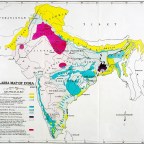
Manuscripts, Mapping, and Provenance
Digital Cartography, Indian Studies, Visualization

Manuscripts, Mapping, and Provenance

The Digital Orientalist has given us many examples of the uses of digital cartography or, more simply, mapping. Ranging from … Continue reading Manuscripts, Mapping, and Provenance

Time and pragmatism in the digital humanities: TEI and Juxta Commons for South Asian manuscript collation
DH in General, Indian Studies, Software, Textual Analysis, Workflow

Time and pragmatism in the digital humanities: TEI and Juxta Commons for South Asian manuscript collation

The best advice I had when starting out with digital humanities came from David Beavan and was simply to only … Continue reading Time and pragmatism in the digital humanities: TEI and Juxta Commons for South Asian manuscript collation

Website Powered by WordPress.com.
  • Subscribe Subscribed
    • The Digital Orientalist
    • Join 334 other subscribers
    • Already have a WordPress.com account? Log in now.
    • The Digital Orientalist
    • Subscribe Subscribed
    • Sign up
    • Log in
    • Report this content
    • View site in Reader
    • Manage subscriptions
    • Collapse this bar