
James Harry Morris and I have put together an introduction to Digital Humanities for people working on one or the other religion in Asia, especially in premodern context. By this we mean we have produced a book of about 340 pages, bringing together 13 experts from across the globe who all contributed a chapter on their expertise. From the last ten years of experience of making The Digital Orientalist into what it is, we have derived the very essentials and labored over shaping the chapters into solid starting points for exploring digital solutions when working on ancient religions. We previously explored the reasons why religions from Asia (the “Orient”) can be usefully discussed together when it comes to digital methodology. We now saw an opportunity to describe such a methodology in-depth.
The book is ordered from most physical to most digital: we start with the study of structures such as temples and statues, then move on to materials containing text such as manuscripts and archives, after which we arrive at the texts themselves contained in databases and editions, to end with born-digital materials such as social media interaction and digital religious practices.
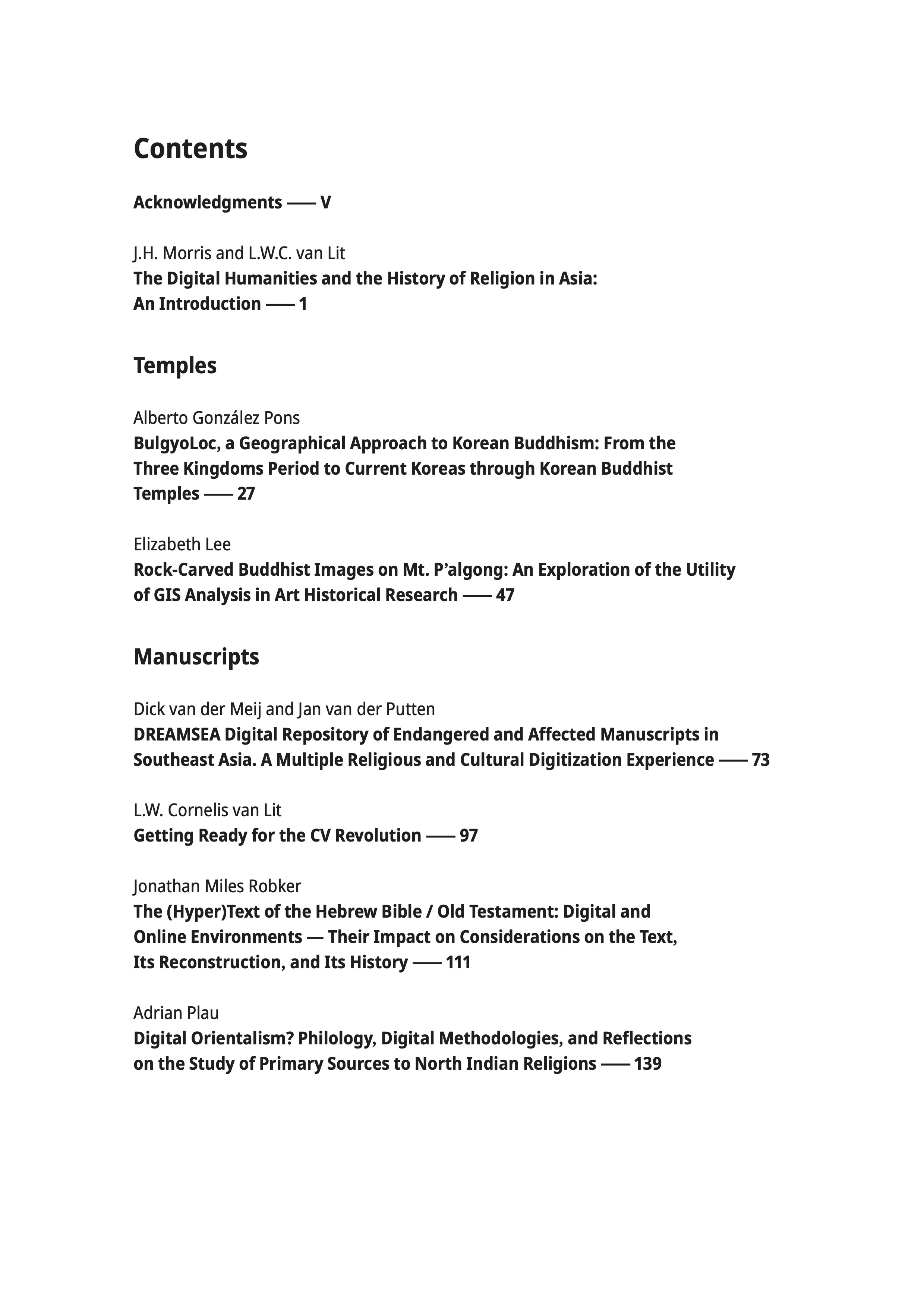
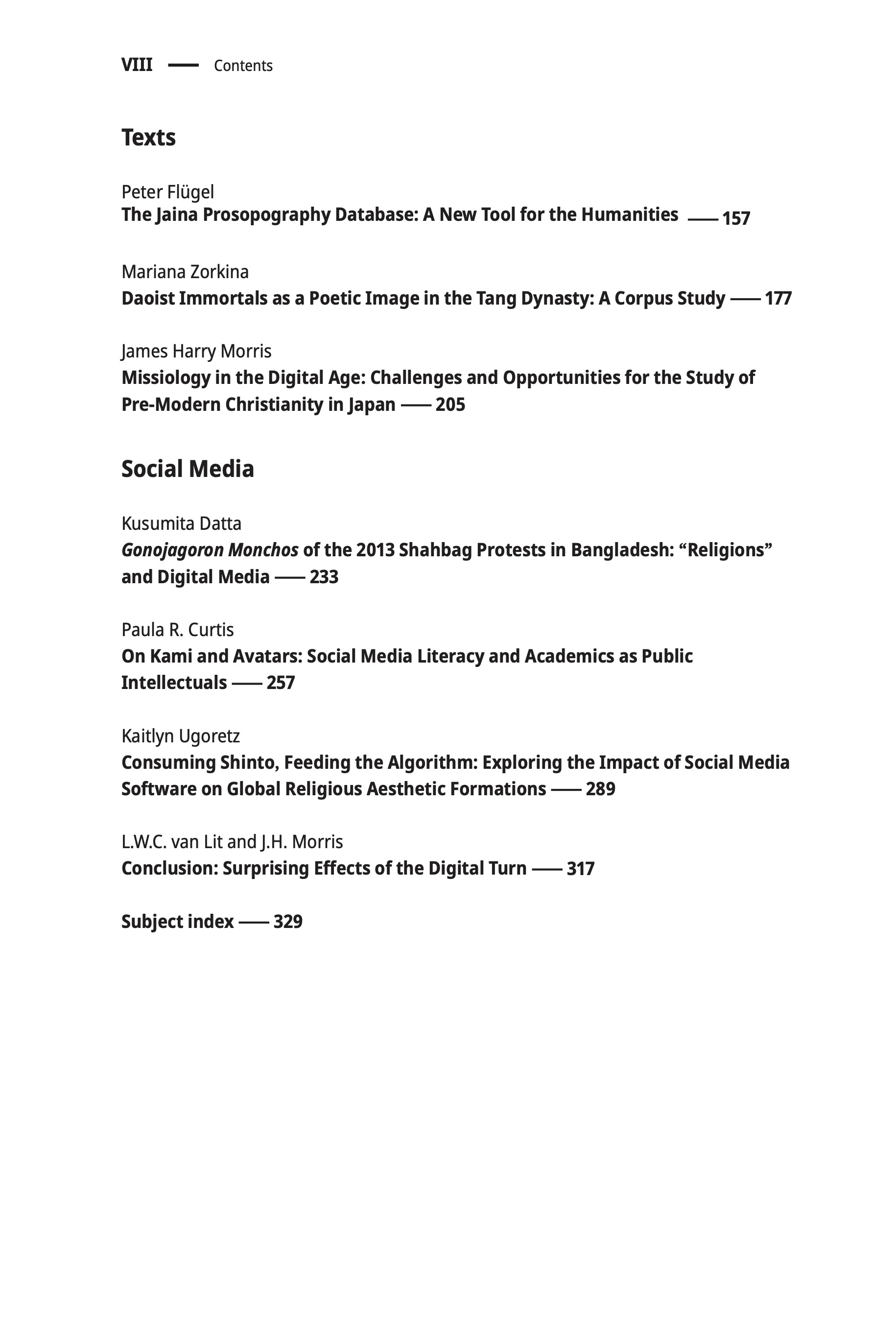
Many chapters contain rich details on best practices for digitization, database creation, text encoding, GIS computation, network analysis, corpus analysis, social media field work, and more.
To this we wish to add that a (to us surprising) theoretical discussion underpins almost all chapters: a reemergence of “Orientalism.” We define this as an oppositional, one-sided representation of a religious expression that forces an epistemological paradigm or power relationship onto an interlocutor. The apparent clarity of modern technology (a paradigm of “it just works”) can obfuscate the inherent messiness of historical reality. For example, placing manuscripts on a map seems like a clean solution to investigate dissemination. But this map does not tell us that a fraction of the investigated manuscripts mention a place in their colophon. The vast majority does not even make it onto the map so the saying power of this map is tenuous at best. Furthermore, if we merely access the manuscripts in one or more European library, does this map say something about the dissemination or something about the routes 19th century Europeans took while purchasing these manuscripts? This line of thinking would seemingly stop us in our tracks and forbid us from doing anything. It would almost seem that with everything we do, we only reinforce the orientalist power dynamic.
And yet, as many contributors cry out, there is still so much to do in order to do justice to the historical record. This is especially true when it comes to digital conservation of cultural heritage. As the world population turns digital, ancient languages and their material representation are forgotten and abandoned. And yet, the advances in technology also create circumstances in which it has become increasingly easy to digitize and enrich our materials. Thus, some contributors point out that breakthroughs are tantalizing close, if we just cooperate and advance a little more. At the same time, scholars now more than ever can be confronted with orientalist’ tropes on social media, that demand a response. For some of our contributors this means that we should rise to be a public intellectual now more than ever, and push back on these tropes.
The book is available for purchase. Since the book owes its existence to The Digital Orientalist, we are happy to give away three copies in a raffle! Check out our social media profile and re-post or like the relevant post to enter a chance to enter the competition! We will complete the draw on January 6th, 2024 at 12:00pm JST.


 The Digital Orientalist