
Introduction
As the digitization of cultural heritage progresses on both a local and a global level, the importance of digital platforms that seek to aggregate and present a cohesive picture of digitized materials grows rapidly. In the case of Greece, this task is undertaken by the National Documentation Centre (Εθνικό Κέντρο Τεκμηρίωσης/ΕΚΤ), the Greek national aggregator for Europeana, which, through its platform, Search Culture, aims to connect and display the wealth of cultural material digitized and made publicly available by various Greek heritage institutions.
This piece will first discuss the technical aspects of Search Culture, aiming to provide an overview of its various services and highlight the benefits it entails for both lay and academic users, before delving into the various search options available for those seeking to explore the culture and history of the southern tip of the Balkan peninsula. Finally, this piece will conclude with a brief example and discussion that demonstrate how specific affordances of Search Culture may be best utilized to approach modern Greek history through a global perspective, focusing on digitized items that showcase the international and transnational linkages of Greece with other regions of the world during the Cold War era.
Search Culture
Search Culture is, at its core, a national portal that aggregates and facilitates access to numerous digitized collections on diverse topics, such as the Delphic Collection, the Archive of the Chamber of Fine Arts of Greece, the Folklore Collection of the Democritus University of Thrace, and the Pandektis: Ancient Greek and Latin Inscriptions collection. Its infrastructure was developed in 2012 and the platform’s central mission was closely aligned with Europeana’s standards, specifications, and vision for a Digital Public Space for Culture: to ensure the long-term, stable access of all parties interested in exploring and researching various aspects of Greek cultural heritage. Heavy emphasis was placed on making the available cultural data both open and FAIR (Findable, Accessible, Interoperable, Reusable).1
Metadata and Infrastructure
One of the major challenges during the development of Search Culture was the need to bridge the gaps among the diverse types of metadata offered by affiliated institutions. To that end, the team behind the platform created several hierarchical semantic vocabularies that would help regulate the metadata of the items available on the platform.2 Taking under consideration the specific needs of the aggregated collections, Search Culture built upon and expanded some of the most extensive and inclusive semantic vocabularies in use today, such as the UNESCO Thesaurus, Geonames, and the Virtual International Authority File, in ways that covered the demands of its collections.3 In turn, each vocabulary term is identified by a unique URI which enables the creation of relationships among various terms and ensures that its data becomes Linked.
Last but not least, the infrastructure acting as the foundation of Search Culture was created by the National Documentation Centre with all six steps of data collection in mind: harvesting, validation, enrichment of cultural data, publishing, storage of digital resources, and publication in Europeana. Each step is served by a separate system created specifically for that purpose that ensures an uninterrupted workflow, as well as the exchange and enrichment of data between Search Culture and affiliated institutions.4 This multilayered process of data aggregation ensures the quality control and long-term maintenance of accumulated metadata on a large scale, all the while enabling the effective compartmentalization of each step. In this way, issues that may arise in any part of the process can be isolated and resolved without disrupting the entire workflow.
Search Capabilities
When it comes to the search capabilities of the platform, Search Culture allows its users to browse and explore its contents in various ways. The home page of the platform features a search bar, complete with options for advanced search, that facilitates a precise query of specific terms. Instead of pursuing a direct query through the search bar, a user may opt for exploring the items and collections featured on Search Culture by “persons”, “places”, “item types” “subjects”, date or through a map.
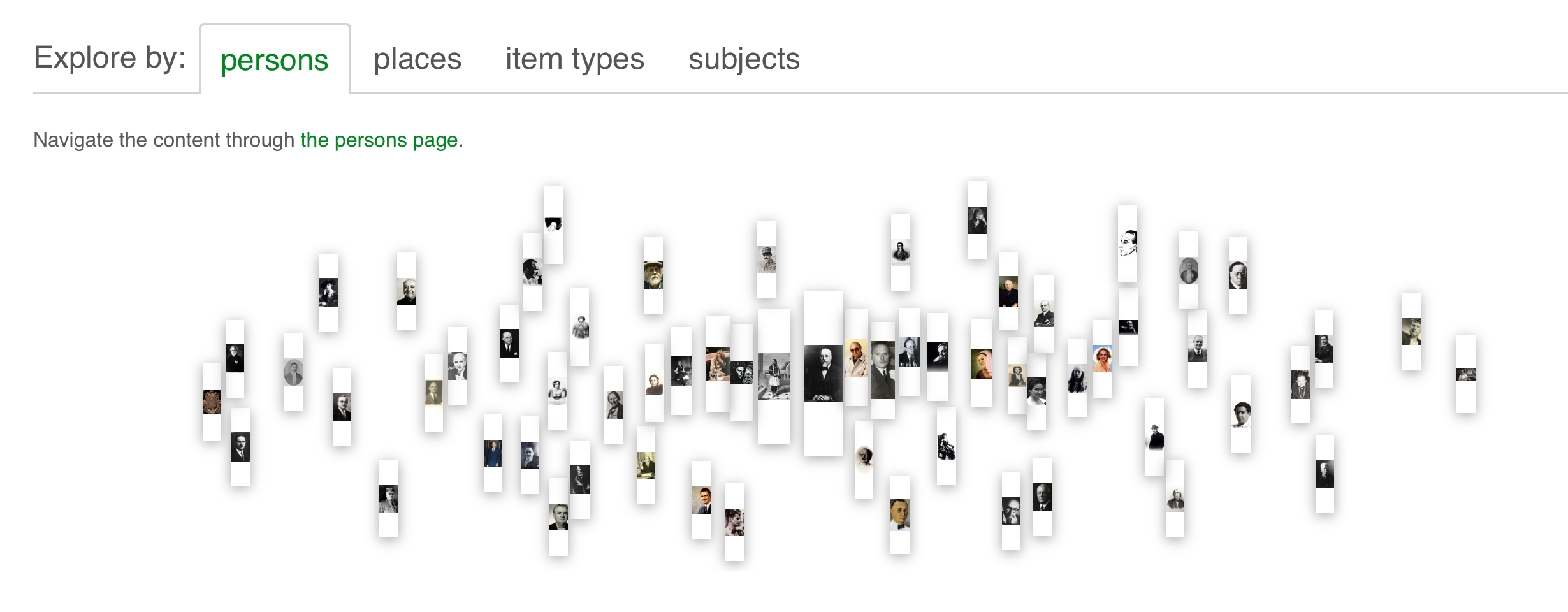
Image 1: Screenshot of various search options
All these options cater to a variety of research needs, yet it is through the “dates” and “map” options that the platform truly shines. By initiating their search through the “dates” option, a user is able to explore items related to various eras of the region, beginning from the Middle Bronze Age and ending with Modern Greece. This search option may be of particular interest to scholars who wish to delve deeper into a specific period of interest and acquire an overview of all items related to that particular era, without having to go through each collection manually. In addition, the “dates” search option also highlights the historical depth and regional cultural connections that evolved and flourished throughout the centuries in the area, such as those related to the Roman or the Ottoman period. In that way, a user is able to acquire a comprehensive temporal overview of the digitized cultural objects related to the various communities and cultures that existed in the longue durée on the southern tip of the Balkan peninsula and then narrow down their search by “year span”, “language”, and “type” of object, among other options.

Image 2: Screenshot of the “dates” timeline search option
The “map” option, on the other hand, approaches the digitized collections through space. By clicking on a spatial cluster of items, the user can zoom in on the map and view a list of collected items related to a specific area along with information regarding the current physical location of each item within the affiliated institutions. One unique and often overlooked aspect of the digitized collections that is showcased through this particular search option, is the number of items associated with the history of cultures other than those that flourished in the southern Balkans. For example, by exploring cultural objects related to Latin America, a user may discover an Argentinian poncho included in the collection of the Basil Papantoniou Foundation.5 Similarly, by exploring the clusters of items in Africa, one may come across photographs taken by Dimitri Papadimos in the late 1940s in Nigeria, currently digitized and held by the Hellenic Literary and Historical Archive – Cultural Foundation of the National Bank of Greece.6

Image 3: Screenshot of the “map” search option
While the advantages of Search Culture’s infrastructure and search options quickly become evident to its users, some aspects of the platform could be developed further in order to accommodate broader research needs and encourage linkages with other relevant national archives. For example, while the platform’s aggregation of items of the Ottoman or the Roman period held within Greek institutions is well documented, there are no references to Italian or Turkish institutions that may also hold objects of relevant interest within their collections, limiting thus the possibility of discovering regional linkages among neighboring national platforms and institutions through search results. If this omission were to be addressed in the future, the search capabilities of Search Culture would be further enhanced and could possibly foster transnational collaboration among national archives.
Exploring Greek Cold War History through Space and Time
This segment will briefly demonstrate how the “dates” and “map” search options of Search Culture can be utilized in tandem by users in order to explore the digitized material available related to the Cold War in Greece, as well as discuss the benefits of using Search Culture in historical research in general.
The Cold War was a global conflict between the United States and the Soviet Union that lasted from 1945 until 1990. Greece participated in the conflict as an ally of the former and was directly influenced by events that transpired on a regional and global level during that period. While Search Culture has separate sub-periods for postwar Greek history on its historical periods page, such as the Civil War (1945-1949) or the military junta (1967-1974), there is still no available option that aggregates all of them under one single “Cold War” era.7 So, in order to search for available digitized items related to the Cold War within the institutions affiliated with Search Culture, first we need to click on the “Modern Greece” (1900-1999) part of the timeline under the “dates” search option. In the next page, a “chronology” search bar will appear, where we can narrow down the historical period of interest further, changing 1900-1999 into 1945-1990. After clicking “search”, the total of items related to our query appear to be available for online viewing. At this point, the digitized items will appear in a grid under the search bar. In order to begin exploring them on a map, however, we need to click the “map” option, located right under the “search” button.

Image: 4 Screenshot of map showing digitized items related to the Cold War period
The map created through our query shows the far historical reach of digitized items related to the Cold War period in Greece and beyond. By selecting specific regions or countries on the map, one can then browse through items related to this particular place. For example, if a user clicks on the 5 items shown to be related to Sri Lanka, they will discover documents related to the British occupation of Cyprus, produced by the Fédération mondiale de la jeunesse démocratique and held within the Contemporary Social History Archives (ASKI) in Athens, Greece. Similar results may be produced if a user chooses to focus on Angola, where they will find a telegram written by the youth of the People’s Movement for the Liberation of Angola (MPLA), or Singapore, where a letter addressed by the University of Singapore Students’ Union to the National Students’ Union of Greece is available for viewing, both held in the Contemporary Social History Archives.
In these examples, digitized items not traditionally considered to be part of Greek national history become visible to users that seek to explore connections and exchanges between modern postwar Greece and other parts of the world. Currently, it is evident that the number of such available items is low. However, as the number of Greek heritage institutions that actively seek to digitize their archives increases, more will become available to a global audience, thus shedding more light on the global dimensions of modern and contemporary Greek history.
Conclusion
This piece discussed the metadata aggregator platform of Search Culture, briefly delineated its technical infrastructure, and explored the possible advantages of utilizing specific search options in order to approach the Cold War in Greece from a global perspective. Through a brief demonstration of its search capabilities, this piece has also shown how Search Culture may be utilized by scholars in particular historical fields in order to gain a precise overview of cultural items available in various Greek institutions.
Overall, Search Culture’s platform acts as a common infrastructural axis upon which various cultural and historical digitized collections intersect, converge, and converse. Despite its limitations, it allows users to transcend the often strictly delineated borders of subfields of historical research and gain a bird’s eye view of the digitized content available in various Greek institutions. By doing so, it provides a fresh perspective on digitized heritage and encourages the exploration of connections among different collections.
Finally, the benefits and security provided by the careful compartmentalization of Search Culture’s aggregation infrastructure could act as a blueprint and inspiration for the development of similar infrastructure by other countries and transnational institutions that seek to collect and preserve digitized objects of cultural importance.
- https://www.searchculture.gr/aggregator/portal/info ↩︎
- https://www.searchculture.gr/aggregator/portal/info ↩︎
- https://www.searchculture.gr/aggregator/portal/info ↩︎
- https://www.searchculture.gr/aggregator/portal/info ↩︎
- http://www.pli.gr ↩︎
- https://www.miet.gr ↩︎
- https://www.searchculture.gr/aggregator/portal/ekt-periods?group=aegean ↩︎

 The Digital Orientalist