This guest contribution was written by Virgine Borges de Castilho Sacoman, MS to PhD student in Sociology at the University of North Texas, and Graduate Teaching Assistant and researcher with the CultPop, MidiAsia, and CEA research groups.
In September 2025, South Korean actor Park Bo-gum held a fan meeting in São Paulo, Brazil. Among the fans who were moved by his visit was a woman in her sixties who recited a poem in front of the artist and the thousands of fans attending the event.[1] The moment gained significant attention in the Brazilian media, given the prevailing assumption that the Korean Wave fandom is predominantly young and female. This assumption is rooted in the fact that interactions between Brazilian fans and Korean artists occur primarily through digital platforms. It is often presumed that younger people possess greater skills with new technologies and networked cultures.
However, the Korean Wave phenomenon is reaching an increasingly diverse audience including older adults who are entering the digital world through affective, communal and unexpected pathways. This reveals how globalized pop culture opens doors to urgent discussions about digital inclusion, digital humanities and the very future of aging in societies ever more mediated by screens.
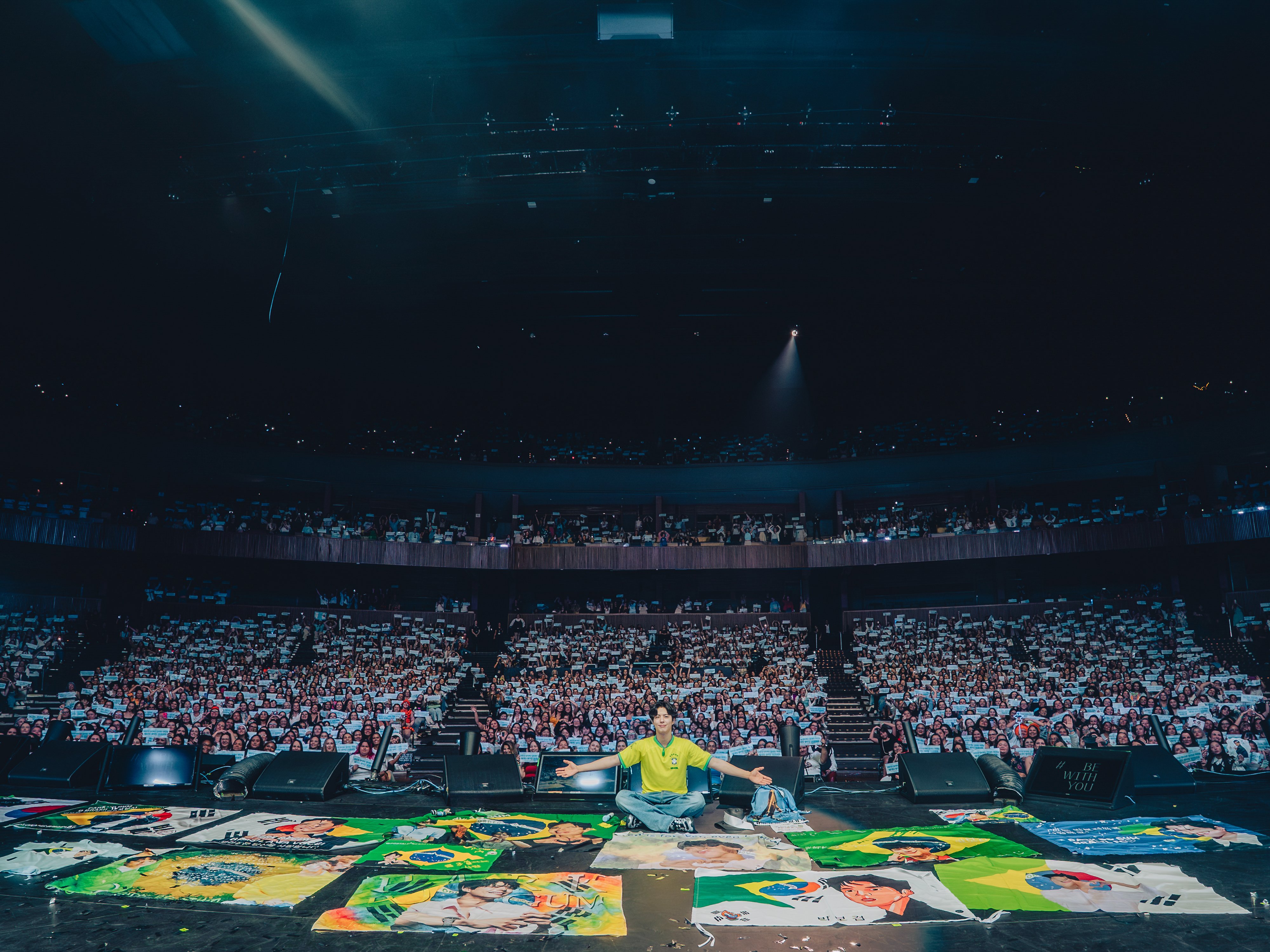
Figure 1 – X @bogummy – Park Go Gum 2025 fan meeting tour [be with you] in São Paulo.
1. Between Hallyu, Technology and Older Adulthood
Hallyu[2] or the Korean Wave, the term used to describe the global expansion of South Korean pop culture since the late 1990s, reached Brazil primarily through digital platforms such as YouTube, Netflix and Instagram. Its polished aesthetics, melodramatic narratives and strong presence on social media initially attracted teenagers and young adults. However, something seemingly unexpected occurred: an increasing number of older adults began consuming, commenting on, and participating in this cultural ecosystem.
Part of this movement was accelerated by the COVID-19 pandemic. Isolated, many older adults turned to screens in search of companionship, and in doing so encountered already popular Korean Wave content, sometimes through family recommendations, sometimes through viral videos, and sometimes out of pure curiosity. For some, Korean dramas evoked nostalgia: slower romances, familiar family conflicts, and characters who speak about love in more traditional ways. For others, K-pop represented vitality, energy, beauty and hope.
At the same time, engagement with the hallyu phenomenon has come with challenges: scams, fake profiles, opaque algorithms, and barriers to digital literacy. Yet these issues arise not because of the Korean Wave itself, but because the phenomenon unfolds within digital environments where such obstacles are common and where older adults tend to be the most vulnerable. In Brazil, there have been cases of older adults deceived by fake profiles impersonating Korean actors, exploiting socio-emotional vulnerabilities. There are also reports of frustrations with learning new technologies, difficulties with subtitles, and language barriers. Thus, the digital experience is ambivalent: full of possibility, but also marked by risks.
2. The Connection Between the Hallyu Phenomenon and Digital Humanities
The case of older Brazilian adults who find in the hallyu phenomenon a new affective and cultural horizon reveals something far greater than a simple pop-culture trend: it illuminates important pathways for the digital humanities at a time when social (and other aspects of) life is becoming increasingly mediated by technology. When we observe how these individuals engage with platforms, fandoms and global content, we see that the digital realm is not merely a technical space but, above all, a human territory, shaped by emotions, identities, vulnerabilities and learning processes.
2.1. The Digital is More Human than Technological
When an older woman learns to use YouTube to watch BTS (a K-pop group) performances or figures out how to download an app just to follow a Korean actor, she is not necessarily “embracing modernity.” What she is doing is finding new ways to feel moved, to revisit memories, to build connections and to participate in the world. The digital humanities must take this perspective seriously: technologies are not mere tools, but extensions of the human experience. They shape emotions, routines, expectations and social practices. By observing the hallyu phenomenon through the lens of aging, we understand that the question is not “How do older adults use technology?” but rather how human beings reinvent their ways of feeling and being through the digital.
2.2. Pop Culture as a Gateway to Digital Citizenship
A large portion of digital inclusion programs and policies fail because they assume that learning technology is a purely technical task. Yet the hallyu phenomenon shows that digital literacy emerges when there is pleasure, purpose and a sense of belonging. The desire to watch a new episode of a K-drama or follow content from an idol becomes a concrete motivation to learn. In this sense, pop culture operates as one of the most powerful gateways to digital citizenship, that is, the ability to navigate, express opinions, participate and position oneself in the contemporary public sphere.
2.3. Fandoms as Living Laboratories of Digital Pedagogy
More than spaces of aesthetic appreciation, fandoms have become environments of collective learning. It is within them that many older adults organically and horizontally learn how to search for reliable information, recognize signs of scams, manage privacy settings, interpret algorithms and create content. In fan groups, people help one another configure their phones, activate subtitles and identify fake profiles. This is a form of digital pedagogy that is affective, communal, and intergenerational, precisely what the digital humanities theorize, but which, in the case of the Korean Wave, becomes vividly and concretely embodied.
2.4. The Digital Future will be Intergenerational or it Simply will not be
If older adults are already participating in global fandoms, then digital culture must be redesigned to fully include them. This requires more accessible platforms, inclusive design, public policies that combat both misinformation and ageism and support for the creation of diverse communities. The digital world cannot remain a territory divided between “young people who know how to use technology” and “older people who must learn to keep up.” On the contrary, the digital future will depend on the ability of all generations to dialogue, learn and coexist within the same online public sphere.
2.5. Technology as an Instrument of Public Health
The case of the hallyu phenomenon also highlights a crucial point: when mediated by affection and community, digital technologies can reduce loneliness, strengthen identity, stimulate lifelong learning and reinforce social bonds, all factors directly related to mental well-being. In a country that is aging rapidly, technology can (and should) be understood not only as a communication tool, but also as a therapeutic, social and emotional resource.
3. Conclusion
In sum, the hallyu phenomenon is not merely a cultural wave; it is a mirror that reveals how we age, how we learn and how we seek belonging in connected societies. Viewed through the lens of Life Course Theory, the phenomenon shows that aging is not rupture but continuity, a process in which individuals reinterpret their trajectories, adapt past interests and incorporate new cultural practices as they move through the life course. By entering digital fandoms, many older adults do not “become young again”; they expand who they have always been, reinterpreting tastes, memories and connections through digital platforms. It is precisely in this encounter between life history, affection and technology that the Korean Wave becomes revealing: the phenomenon shows that the digital does not replace prior experiences but intertwines with them, allowing people at different stages of life to find new forms of meaning. Thus, the phenomenon reminds us that the digital humanities are not a field about machines, but about people, and about the ever-surprising ways they reinvent their identity, their continuity and their place in the digital world.
Notes
[1] Dani Andrade[@mundokdani]. (2025, October 31). Mais uma vez, caso de etarismo [Reel]. Instagram. Link: https://www.instagram.com/reel/DO8ZkrnDvNG/.
[2] The term Hallyu was created by the Chinese press to describe the success of South Korean dramas in China. The word comes from the Mandarin Han (Korean) and liu or ryu (wave), which together mean “Korean Wave” — a metaphorical expression referring to the “cultural tsunami” of South Korean products (Mazur 2018; Ganghariya and Kanozia 2020).
Reference Works
Carvalho, H., “‘Não tenho nem o que comer’, diz vítima que perdeu R$ 40 mil em golpe do perfil falso de ator sul-coreano,” G1, 2022, September 20. https://g1.globo.com/sp/ribeirao-preto-franca/noticia/2022/09/20/nao-tenho-nem-o-que-comer-diz-vitima-que-perdeu-r-40-mil-em-golpe-do-perfil-falso-de-ator-sul-coreano.ghtml
Chopik, W. J., “The benefits of social technology use among older adults are mediated by reduced loneliness,” Cyberpsychology, Behavior, and Social Networking 19:9 (2016): 551–556. https://doi.org/10.1089/cyber.2016.0151
Ganghariya, G., & Kanozia, R. K., “Proliferation of Hallyu wave and Korean popular culture across the world,” Journal of Content, Community & Communication 11:6 (2020): 177–207. https://www.amity.edu/gwalior/JCCC/pdf/june_14.pdf.
Mazur, D. S. M., “Hana Yori Dango e o mercado televisivo,” (Master’s thesis, Universidade Federal Fluminense, 2018).
Ragnhildsløkken, H., Bonsaksen, T., Aakhus, E., Kabelenga, I., Lamph, G., Price, D., & Geirdal, A. Ø., “Social media use and associations with psychological distress among older adults during the COVID-19 Pandemic,” Impact of Social Media on Health and Well-Being 13:12 (2023): 634. https://doi.org/10.3390/socsci13120634.
Cover Image: “BESTie at Incheon Hallyu Tour Concert, 17 September 2014” by oldlady is licensed under CC BY 4.0.

 The Digital Orientalist