
The Bibliotheca Alexandrina, inaugurated in Alexandria, Egypt in 2002, serves as a symbolic cultural institution reviving the spirit of the ancient Library of Alexandria in the 21st century. This modern library has established its mission to preserve humanity’s intellectual heritage through cutting-edge technology and to provide knowledge to the global community. By leveraging the internet and digital technologies, the institution aims to promote intercultural understanding and tolerance, collaborating with cultural and academic institutions, governments, and corporations both domestically and internationally to implement numerous ambitious digital projects. The following sections present specific examples of the library’s digital archival initiatives and educational outreach activities, based on the author’s site visit and research conducted on September 11, 2025.
Digital Archival Activities for Documentary and Historical Materials
The Bibliotheca Alexandrina has established itself as a leading institution in the Middle East and North Africa region for the preservation and dissemination of cultural heritage through digital archives (fig.1). The library houses state-of-the-art digital laboratories where numerous specialized staff members digitize diverse materials including paintings, photographic films, books, manuscripts, and maps, adding metadata and ensuring electronic preservation. The vast digital assets accumulated through these efforts are centrally managed through the library’s proprietary Digital Assets Repository (DAR), enabling online searching and access. Supported by this technological infrastructure, the library has undertaken numerous digitization projects for historical materials in collaboration with domestic and international institutions.
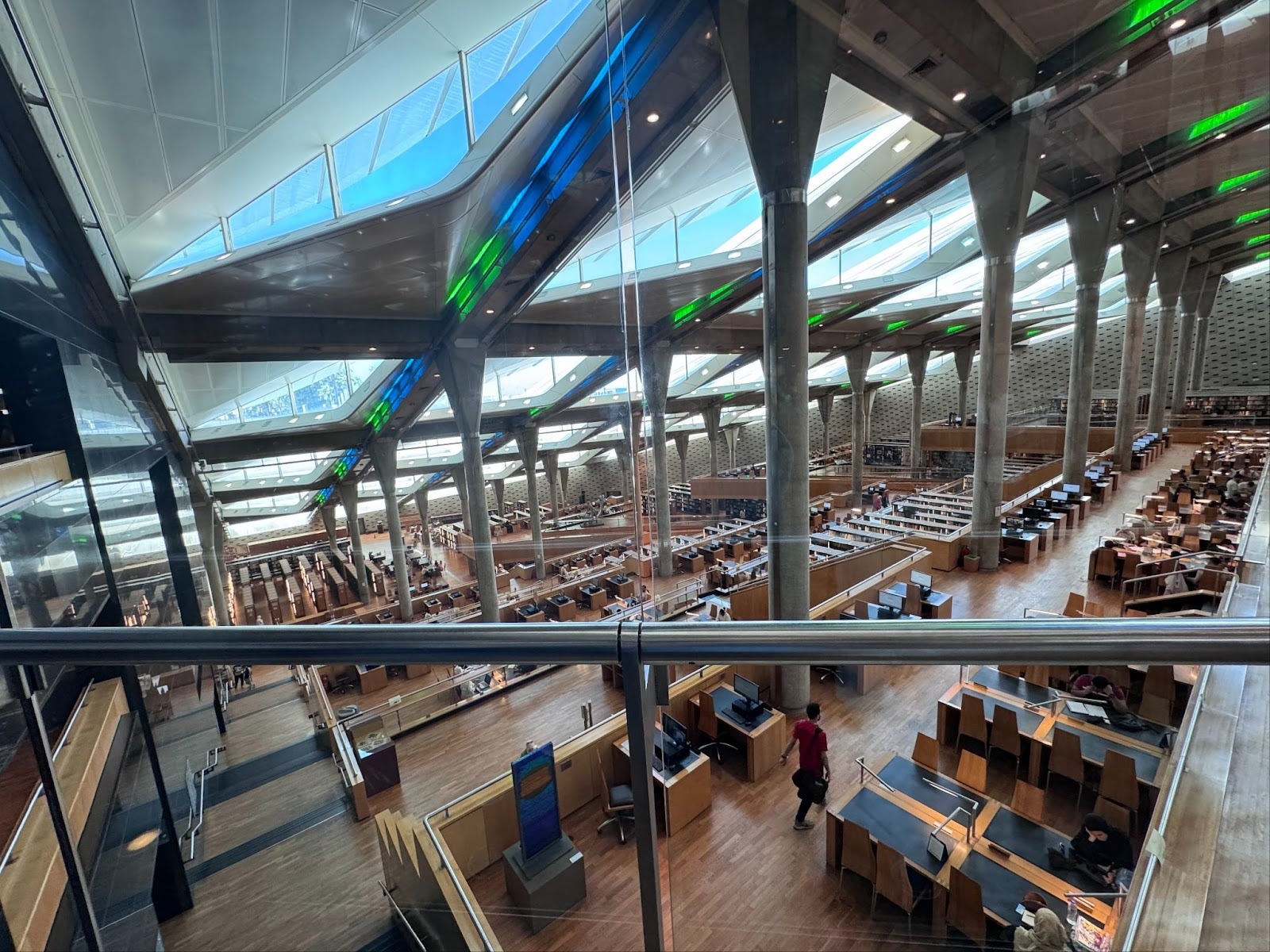
Figure 1 – Interior of the Bibliotheca Alexandrina (photographed by the author on September 11, 2025).
Examples of Major Digital Archive Projects
Memory of Modern Egypt: A comprehensive digital archive spanning 200 years of modern Egyptian history. The collection encompasses approximately 60,000 items across 14 categories of materials, including official documents, photographs, films, audio recordings, maps, stamps and currency, and newspaper articles, with a total data volume of 470 gigabytes. The archive is characterized by its multidimensional database that can cross-reference and display different types of materials thematically, and is publicly accessible through a user-friendly interface and search functionality. This project has benefited from cooperation with the Egyptian government and various institutions; for example, the digitization of the Arab League Archives involved converting photographic, documentary, and audiovisual materials from the League into digital format for integration into the Memory of Modern Egypt collection.
Gamal Abdel Nasser Digital Archive: A comprehensive digital archive of official and private materials related to Gamal Abdel Nasser, Egypt’s second president (in office 1954–1970). The collection digitizes extensive historical materials provided by the Nasser Foundation, including official documents, correspondence, photographs, films, and audio-visual recordings of his renowned speeches, and publishes them as a website with metadata and full-text search capabilities in both Arabic and English. The website enables multifaceted exploration of Nasser-era Egypt, making invaluable historical materials readily accessible not only to Egyptian researchers but also to scholars abroad.
Anwar Sadat Digital Archive: A digital archive compiling all materials related to Egypt’s third president, Anwar Sadat (in office 1970–1981). Developed in parallel with the Nasser Collection, this archive comprehensively digitizes official documents, photographs, films, and speech records from the Sadat administration. These presidential archives represent a systematic effort to preserve and disseminate primary sources for contemporary Egyptian political history, establishing a valuable foundation for historical research and education.
Memory of Suez Canal: A specialized archive documenting the history of the Suez Canal from its mid-19th century opening to the present day. The archive consolidates and digitizes diverse materials including construction blueprints, company records, photographs of the opening ceremonies, and documentary footage of the canal’s nationalization and related conflicts. As a large-scale digital archive of the canal’s history, it serves as an important resource for maritime history and modern Middle Eastern studies.
Al-Hilal Digital Archive: A digitized collection spanning 113 years of Al-Hilal, Egypt’s preeminent literary and intellectual magazine, from its inaugural issue in 1892. This comprehensive archive of a magazine conveying the discourse of 19th and 20th century Egyptian intellectuals enables keyword searching and browsing. The digitization of such a long-running cultural magazine represents a pioneering case in the Arab region and constitutes an important research foundation for modern intellectual history.
The Digital Collection of Description de l’Egypte: The library produced the world’s first complete digital edition by high-resolution scanning of all volumes of the Description de l’Égypte, the monumental work compiled during Napoleon’s expedition to Egypt (fig.2). The meticulous illustrations and explanations from the original French edition are now available for online viewing, significantly improving access to this work. This achievement was also contributed to the World Digital Library (WDL), led by UNESCO and the Library of Congress, with the Bibliotheca Alexandrina participating as a technical partner in the development and operation of the WDL’s official launch in 2009.
Digital Manuscripts Library: A project to digitize and publish rare manuscript collections from the Arab-Islamic world. In addition to rare books held by the library’s Manuscript Museum, the project collaborates with various domestic and international institutions to select, photograph, and publish digital editions of scarce manuscripts.
Eternal Egypt: A digital cultural heritage archive developed through collaboration between CULTNAT (Center for Documentation of Cultural and Natural Heritage), under the Bibliotheca Alexandrina, and IBM. This multilingual online museum presents historical artifacts, archaeological sites, and artworks from across Egypt through high-resolution images, 3D models, and 360-degree panoramic videos. Featuring virtual reconstructions of the Karnak Temple, 3D exploration of ancient cities, and navigation through historical timelines and maps, the platform provides an immersive learning experience utilizing cutting-edge technology, contributing to international understanding and appreciation of cultural heritage.

Figure 2 – Homepage of the Description de l’Égypte Digital Archive.
As demonstrated above, the Bibliotheca Alexandrina has advanced the digitization and publication of diverse materials related to Egypt and the Middle East. Many of these projects have been realized through partnerships with domestic and international collaborators. For example, under an agreement with the Internet Archive in the United States, the library established mirror sites for all web resources; participated in the Million Book Digital Library Project led by Carnegie Mellon University to promote large-scale e-book digitization alongside libraries worldwide; and through the OACIS initiative in partnership with Yale University and 18 other institutions, constructed a union catalog of scholarly journal information from the Middle East region, thereby contributing to the development of a global “knowledge-sharing” infrastructure. Through these initiatives, the library achieved remarkable results within less than a decade of its establishment, solidifying its presence in the field of digital humanities.
The Bibliotheca Alexandrina has played a pioneering role not only in constructing digital archives but also in developing digital educational materials and online education utilizing these resources. The library’s BA Information for Africa (BAIFA) offers numerous online courses for enhancing information literacy and research skills, accessible free of charge via the internet to a broad range of participants including those from African nations. These courses, ranging from specialized skill training for librarians and researchers to information literacy programs for students and the general public, are delivered on the MOODLE platform. For instance, multilingual courses on practical topics such as academic writing, reference management and citation methods, online database utilization, and presentation skills are available, allowing participants to engage in self-paced learning. In Egyptology specifically, there is an online platform called “Hieroglyphs Step by Step” for learning Ancient Egyptian written in hieroglyphs (fig. 3). Such open educational resources contribute to strengthening regional research capacity. By contributing to the development of global open educational resources in this manner, the library demonstrates a new role for libraries in knowledge dissemination.

Figure 3 – Page explaining Middle Egyptian coordination in Hieroglyphs Step by Step.
The Bibliotheca Alexandrina exemplifies how a modern cultural institution can harness digital technologies to fulfill the classical mission of libraries: the preservation and dissemination of knowledge. Through its diverse digitization projects, the library has transformed fragile historical materials into accessible digital resources, enabling scholars and the public worldwide to engage with Egypt’s rich documentary heritage. Its collaborative approach—partnering with governmental bodies, international universities, and technology organizations—demonstrates an effective model for sustainable digital humanities infrastructure in the Global South. Furthermore, by extending its activities beyond archival work to encompass open educational resources and capacity building, the institution addresses not only preservation but also the cultivation of future researchers and informed citizens. In sum, the Bibliotheca Alexandrina has emerged as a pioneering institution in the digital humanities, illustrating how a modern library can both preserve cultural heritage and expand access to knowledge on an international scale. Such efforts demonstrate the library’s commitment to building a global infrastructure for facilitating research and ensuring that humanity’s intellectual heritage remains accessible to future generations.
The article is based on an English translation from the Japanese article “アレクサンドリア図書館におけるデジタル・ヒューマニティーズの取り組み” (“Digital Humanities Initiatives at the Bibliotheca Alexandrina”) by So Miyagawa, prepared for publication in 人文情報学月報 (Digital Humanities Monthly, DHM), published by the International Institute for Digital Humanities (人文情報学研究所). Please visit: www.dhii.jp/DHM/.
