Skip to content

The Digital Orientalist

Practical examples and theoretical reflections on the do's and don'ts of using digital tools for your study and research in African and Asian Studies.

Primary Navigation

  • About
    • About The Digital Orientalist
    • Team
    • Hall of Fame
    • Newsletter
  • Topics
    • African Studies
    • African Languages
    • Ancient Near Eastern Studies
    • Archiving
    • Between Legal and Illegal
    • Buddhist Studies
    • Chinese Language
    • Coding
    • DH in General
    • DH in Practice
    • Digital Cartography
    • Digitization
    • Equipment
    • Events & Conferences
    • Hardware
    • Housekeeping
    • Indian Studies
    • Islamic Studies
    • Iranian Studies
    • Islamic Languages
    • Korean Studies
    • Japanese Studies
    • Mongolian Studies
    • OCR
    • Online Resources
    • Ottoman Studies
    • Sinology
    • Social Media
    • Software
    • Syriac Studies
    • Teaching
    • Textual Analysis
    • Theory
    • Using Real Paper
    • Visualization
    • Workflow
  • Submissions
    • Submission Guidelines
  • Publications
  • The Digital Orientalist’s Conferences
    • 2025 – “AI and the Digital Humanities”
      • Titles and Abstracts
      • Conference Proceedings
    • 2023 – “Sustainability in the DH”
      • Conference Proceedings
    • 2022 – “Infrastructures”
      • Titles and Abstracts
    • 2021 – The Digital Orientalist’s Virtual Conference
      • Titles
    • 2020 – “Digital Orientalisms 2020”
  • Donate
  • Search
  • ISSN: 2772-8374

Social Navigation

  • X
  • Facebook
  • Instagram
  • YouTube
  • LinkedIn
  • BlueSky

Category: Visualization

Introduction to the NTVMR
Biblical Studies, DH in General, DH in Practice, Online Resources, Software, Textual Analysis, Visualization, Workflow

Introduction to the NTVMR

Today’s contribution was written by Greg Paulson. Paulson is a research associate at the Institute for New Testament Textual Research … Continue reading Introduction to the NTVMR

The Changing Role of Textile Making: Text Analysis of Digitized “Lienü zhuan” with Voyant Tools (Part I)
Chinese Language, Sinology, Textual Analysis, Visualization

The Changing Role of Textile Making: Text Analysis of Digitized “Lienü zhuan” with Voyant Tools (Part I)

Voyant Tools is a popular website that offers a series of text analysis tools for examining word frequencies, patterns, and … Continue reading The Changing Role of Textile Making: Text Analysis of Digitized “Lienü zhuan” with Voyant Tools (Part I)

Fingernail Art (II): Three-dimensional Calligraphy and Drawing in the 19th-Century
Digitization, Indian Studies, Iranian Studies, Islamic Studies, Topics, Visualization

Fingernail Art (II): Three-dimensional Calligraphy and Drawing in the 19th-Century

Part II : Neighbouring Countries and Contemporary artists Abstract Fingernail art is a little known and studied Persian artistic medium, … Continue reading Fingernail Art (II): Three-dimensional Calligraphy and Drawing in the 19th-Century

Codicological Visualization of a Syriac Manuscript with VisCodex
DH in Practice, Online Resources, Syriac Studies, Visualization

Codicological Visualization of a Syriac Manuscript with VisCodex

A data model for modelling and visualizing the structure of books in codex formats has existed since the middle of … Continue reading Codicological Visualization of a Syriac Manuscript with VisCodex

DH in Korea: The Digital Humanities Lab at the Academy of Korean Studies
DH in General, DH in Practice, Digitization, Korean Studies, Online Resources, Teaching, Visualization

DH in Korea: The Digital Humanities Lab at the Academy of Korean Studies

In a previous post I briefly presented some of the richest and most commonly used online resources for Korean Studies. … Continue reading DH in Korea: The Digital Humanities Lab at the Academy of Korean Studies

Text-Matching at the Canonical Crossroads: An Introduction to BuddhaNexus (Part II)
Buddhist Studies, Chinese Language, DH in General, Indian Studies, Online Resources, Textual Analysis, Visualization

Text-Matching at the Canonical Crossroads: An Introduction to BuddhaNexus (Part II)

In my previous post about the text-matching database BuddhaNexus, I corresponded with project co-director Orna Almogi, who described the promise … Continue reading Text-Matching at the Canonical Crossroads: An Introduction to BuddhaNexus (Part II)
Manuscripts, Mapping, and Provenance
Digital Cartography, Indian Studies, Visualization

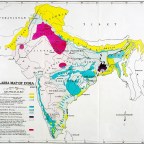
Manuscripts, Mapping, and Provenance

The Digital Orientalist has given us many examples of the uses of digital cartography or, more simply, mapping. Ranging from … Continue reading Manuscripts, Mapping, and Provenance
Virtual Reality from Mamluk-Period Cairo
Islamic Studies, Online Resources, Teaching, Visualization

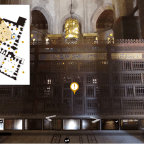
Virtual Reality from Mamluk-Period Cairo

Several months ago, some of my colleagues in Japan launched an online portal through which it is possible to explore … Continue reading Virtual Reality from Mamluk-Period Cairo

Social Scientific Applications of Historical GIS, Part 2: Linking and Visualizing Population Data in ArcGIS
DH in General, Digital Cartography, Islamic Studies, Ottoman Studies, Software, Visualization

Social Scientific Applications of Historical GIS, Part 2: Linking and Visualizing Population Data in ArcGIS

This post has been contributed by Emre Amasyali. Information about the author is included at the end of the post. … Continue reading Social Scientific Applications of Historical GIS, Part 2: Linking and Visualizing Population Data in ArcGIS

Social Scientific Applications of Historical GIS, Part 1: Digitizing Historical Maps and Creating District Polygons in ArcGIS
Digital Cartography, Islamic Studies, Ottoman Studies, Visualization

Social Scientific Applications of Historical GIS, Part 1: Digitizing Historical Maps and Creating District Polygons in ArcGIS

This post has been contributed by Emre Amasyali. Information about the author is included at the end of the post. … Continue reading Social Scientific Applications of Historical GIS, Part 1: Digitizing Historical Maps and Creating District Polygons in ArcGIS

Posts navigation

Older posts
Newer posts
Website Powered by WordPress.com.
The Digital Orientalist
Website Powered by WordPress.com.
  • Subscribe Subscribed
    • The Digital Orientalist
    • Join 334 other subscribers
    • Already have a WordPress.com account? Log in now.
    • The Digital Orientalist
    • Subscribe Subscribed
    • Sign up
    • Log in
    • Report this content
    • View site in Reader
    • Manage subscriptions
    • Collapse this bar
 

Loading Comments...