
This is a guest post by Damian Mandzunowski.1 The author bio is below.
The premise behind this piece is simple: to show how even basic digital tools (such as digital curatorship, a website, and a system of tags) can help in finding new viewpoints for our research, especially in moments of crisis or doubt. When the initial plan for the direction of my own doctoral thesis was turned upside down by the restrictions imposed by the COVID pandemic, I was forced to go back to the drawing board. Soon, I re-discovered a previously put-aside collection of sources—historical photographs—and I was able to create a digital framework for easy and stimulating file management, which proved to be of substantial aid in my research transition. In the process, I learned much about best practices of digital curatorship and the handling of special collections. Thus, in this post I introduce the thinking and work behind, and also lessons drawn from, my repository of historical photographs titled “Reading in China Photographed.”
In the last 30-40 years, there have been changes regarding the types of sources historians treat as relevant. Gradually, researchers began to move away from purely text-based investigations, recognizing the cultural and historical value of visual sources. In what has since been referred to as a “pictorial turn,” images first evolved from acting as supplements to verbal or textual evidence into their complements and, eventually, into full-fledged historical sources in their own right. This is true in some subfields more than others—the history of reading, for example, has a particular fondness for historic depictions of people captured or visualized in the act of reading. Numerous art albums showcase examples from classical or modern art, and various research articles have been written that analyze the relationship between historical reading acts and their imagery. It should thus come as little surprise that in my own research on officially organized collective reading practices in the People’s Republic of China (PRC), I amassed a substantial collection of historical photographs depicting people reading together.
I initially intended for my doctoral thesis to be a sociopolitical study in history based predominantly on archival material and oral history interviews with former participants in the reading activities. Yet, the first year of my PhD coincided with the start of the COVID-19 pandemic. What followed were strict entry laws and human movement regulations, international travel bans, and finally the virtual closing of China’s borders, eventually lasting almost three years. If I wanted to submit the thesis by the expected deadline, my proposal needed to be readjusted. Since I had set out to analyze the whys and hows behind the Chinese socialist party-state’s decade-long use of collective reading practices, I reasoned that exploring the visual culture around the phenomenon was in fact crucial for my study.2
The finished dissertation still predominantly uses archival and textual sources, which I was lucky to have had access to. But it also extensively discusses depictions of group study in propaganda posters, documentary film reels, socialist comics and cartoons, and historical photographs. The photographs, by and large, fall into two categories: (1) official images created by Chinese photojournalists at Xinhua News and related agencies for use within the public media realm, and (2) photographs taken by other people and/or for other purposes, both official (e.g., by soldiers or foreign journalists) and private (e.g., by common people or exchange students). In my dissertation, which I am now reworking into my first monograph, I predominantly analyze official photographs; a short research article (Mandzunowski 2022) provides a glimpse at my methods and their application. These photographs, print copies and negatives—which I collect online and at regular flea markets—are for now gathered in my personal collection, awaiting to be digitized and uploaded at a later stage.
While looking for images relevant to my study, I began to see more collections of images of the second type: snapshots of a past reality taken by foreign visitors or private individuals, digitized and posted online by university libraries, photography foundations, state institutions, and by the photographers themselves. I started to look through thousands of images to discover the occasional depiction of a reading act. So it happens that, in an unlikely turn of events, the COVID pandemic actually accelerated a process that had been going on for a few years already: dozens of individuals and organizations decided to make their collections open access, resulting not only in a greater quantity of material, but perhaps also a broader range of platforms and more types of content available online than ever before.
The result was a collection of historical photographs depicting people in China engaging in the act of reading throughout the (long) twentieth century. Given the wealth of images, I created “Reading in China Photographed” to showcase these in a visually more productive way. As can be seen by the variety of the 385 photos featured there now (May 2026), this collection goes beyond my main category of interest, namely collective reading, to include reading in the broadest sense: any form of active engagement with meaning-bearing texts. Thus, I include in the collection photographs of all types of reading and reading-adjacent situations, such as a passersby looking at a big-character-poster, people listening to someone reading aloud, a tourist consulting a map, a group discussing a text, children taking-in advertisement posters at a toy shop window display, and even a child literally biting into a book (see Figure 1. for an example post).

Figure 1. A sample post: a descriptive title (added by me), the image, photographer’s name and link to the source, tags and categories, other recent posts. Transparency and traceability of sources are crucial for research and so the original online source of each photograph is always provided in the respective posts.
In the process of curation, I also began to assign categories describing in basic terms the type of reading material depicted in each photograph (e.g., ‘book’ or ‘comics’) and the historical period (e.g., ‘Republican China’ or ‘Reform Era’), as well as keywords with (if known) the exact year or decade and the location of each image (see Figure 2). In the ongoing process of browsing and collecting, I continuously expanded the sources as well as the assigned tags and categories, allowing for the structure to be flexible yet stable. This categorization system allowed me in turn to discover new connections and commonalities, but also changes and differences, when the photos were viewed in their respective categories or by keyword type.
Of course, this could have been done in many other ways too, such as by utilizing specialized image organization apps like Lightroom or darktable, the smart folder and tagging option on your operating system, or by manually adding tags into a designed spreadsheet. Yet, by adding these directly in the WordPress website, I achieved one further unplanned result: the website became useful for other people, too. At first, the idea behind the repository was an attempt to organize digitally the many photographs I kept finding online, in books, and albums. It was a data cleaning and file management exercise for my own purposes. By uploading images that I stumbled upon in all kinds of places to the repository, I was forced to reorganize and clean-up my materials, take note of their prominence, and engage closer with what they were depicting.
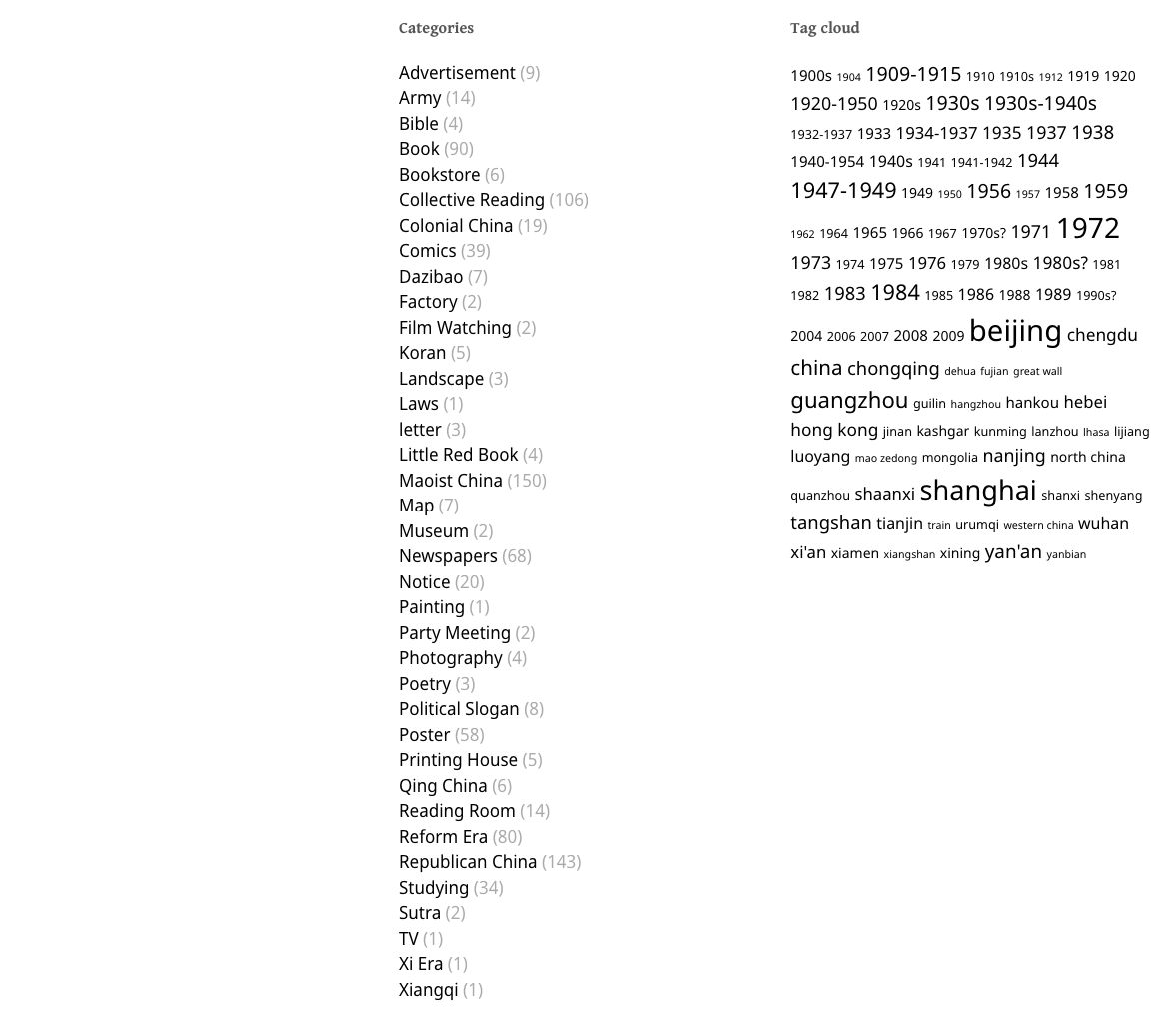
Figure 2. The tags and categories I assigned to the photographs (and thus entirely based on my own perception and reading of the images). Considering it now, I should have put more emphasis on consequently retaining the categories and keywords for all images, also by retroactively adding a new keyword to all fitting images that were already posted.
The process also enabled a snowball-like discovery of more relevant photographs. More often than not, a simple online search for the photographer or source behind a given image discovered in a grouped collection or published album resulted in me discovering new collections of historical photographs, many of which also included some images of people reading. All these collections and websites hosting the original images are listed on the Sources subpage; the list expands with each new photograph and each new discovered collection, and will be of use to scholars and students of twentieth century China who might want to browse other photographs too (see Figure 3). Thus, in addition to offering a gallery of truly great historical photographs, the website aggregates collections and works as a starting point for their further exploring. For example, by browsing my collection, one can take a step into the digitized collections of various pictorial magazines (e.g., China Pictorial, China Reconstructs, or Peking Review), the digitized collections of national photography archives (e.g., of Poland, Germany, or Switzerland), or extant photography collections held at various universities (e.g., Bristol, Stanford, Cambridge, Duke, Berkeley, or Washington). Furthermore, the massive digital repository at Shuge.org offers mirrors of many of these and other collections of historical photographs of China. Covell Meyskens’ “Everyday Life in Maoist China” is a pathbreaking project in digital curatorship of historical images and a great inspiration for my own work. Finally, a great but often overlooked resource are personal photographs taken by tourists, journalists, and common people; many of these can be found on Flickr, as well as in the collection of Thomas Sauvin’s fascinating Beijing Silvermine project.

Figure 3. The current list of sources wherefrom I have extracted photographic depictions of reading acts in China; a list that is constantly updated.
Over time, I realized that “Reading in China Photographed” is also a useful directory for teaching, both on the undergraduate and graduate levels. The photographs collected here can be used in students’ presentations, or as vivid sources to tackle research questions (such as: Are the depictions of reading acts balanced, that is, do all types of reading occur in the same amounts or are some more represented than others?” What does this tell us about the visual culture around reading? Can you spot how aspects of gender, age, class, race, and other social-political categories feature into the way a given photograph of reading is composed?) The photographs can also be included as material for group work in class. In one seminar I gave, for example, I asked students to expand contextually on the reading situation shown in a given photograph: by setting the starting point in the photographically captured historical act of reading, we were then able to talk about all kinds of related dimensions of the social-political-cultural sphere reverberating beyond the image. The various dimensions related to technologies and techniques of photography itself can be explored via these historical photographs, especially given the somewhat straightforward comparative possibilities with the large body of visuals related to depictions of reading in regions other than China.
Pivoting from a thesis based strictly on archival and oral history to one integrating such texts with historical images offered a clear path forward: what would have required prolonged periods of fieldwork in China at a time when that was not possible evolved into an interdisciplinary thesis that was both doable and resulted in a stronger dissertation than initially planned, because it engaged with an even richer set of historical sources. It also resulted in the creation of “Reading in China Photographed” which, at over 3000 unique website visits in five years, indeed resonated wider than expected.
Now, would I do everything the same way if I were doing it today? No—and that’s okay! Research is after all a continuously evolving process. I believe this experience to be one of lessons learned, lessons that I want to share here.

Figure 4. Another sample post with example of tags and categories used. Transparency and traceability of sources are crucial for research and so the original online source of each photograph is always provided in the respective posts.
As I had no hands-on support from a digital humanities center, I came to many of the solutions I described above primarily on my own and for my own use. Thus, I did not necessarily consider the arguably most important data principles underlying all digital humanities scholarship: to be findable, accessible, interoperable, and reusable (FAIR). Many universities now have digital humanities labs or support desks that offer help to students; these are irreplaceable, especially when preparing to work on special collections consisting of unique historical materials. WordPress, as a commercial provider of for-profit webpage packages, inevitably presents a challenge to these themes, and so do other methodological decisions that I took with regard to file management. Some of the changes that I would undertake would be to organize my files in a more meaningful way locally, so that I could browse them offline too, and regularly back up my data. That would also entail creating a database, be it in CSV or SQL, for an immediate overview of all relevant metadata (file location, title, date, creator, etc.) rather than keeping the information on a website only. For the online storage of the files, I would now use open-source repositories, such as GitHub; and a similarly functioning website solution for their online showcasing, like GitHub Pages, instead of commercial solutions. Another option would be to make use of the possibilities of an International Image Interoperability Framework (IIIF)-compliant server (like Cantaloupe) for hosting the images. IIIF, itself a set of standardized web APIs, offers advanced viewing and browsing options especially useful when dealing with heavy TIFF files. It also allows users to select areas or subjects within an image and attach specific tags to these, something made easy through correlated IIIF viewers (like Mirador or Universal Viewer). I haven’t used it myself but Tropy is another recently developed tool that promises to be of use when handling photographic archival data.
The tagging of images should start with a clearer definition of the end goal. Are the tags intended for cataloging, for myself or other people, for machine learning models or otherwise? Each of these will result in slightly different tagging processes. In general, a good practice is to make use of extant tags and categories along with object-specific entries only when necessary. For datasets of historical materials, it is important to put effort into correct metadata preservation. Using established standards, like Dublin Core, allows users to manage the baseline information, such as the provenance of the image, its title, creator, but also the technical aspects of the image as well as other contextual data about its creation. Then, for more detail-oriented tagging, relying on established, field-specific ontologies helps to avoid ambiguities or inconsistencies. In the case of historical photographs or visual culture in general, the most relevant subsets built specifically for cataloging visual materials are the Library of Congress Thesaurus for Graphic Materials (LOC TGM), the Visual Resources Association Core (VRA Core), and the Getty Vocabularies and the Getty Art & Architecture Thesaurus (AAT) in particular. Vocabulary lists such as these offer standardized terms that, when applied consistently, work toward achieving the goals of FAIR data handling.
Even if what I appreciate the most are the lessons I learned in the process, “Reading in China Photographed” was a valuable tool to order my materials, offer a faster and more useful browsing experience, and discover new sources. Thus, even though the main source base for the dissertation were of the historiographical type—i.e., archival and quasi-archival texts—my systematic use of photographs, along with other images from the era such as Chinese socialist comics (lianhuanhua 连环画), significantly expanded my research scope. Thanks to the way “Reading in China Photographed” showcased the photographs of people reading, I saw how the variety of reading situations in China were broader and more diverse than perceivable from textual sources only.
References
Damian Mandzunowski, “News Photography and Visual Political Communication in the People’s Republic of China, 1960s–1980s,” ERCCS-Research Notes 4 (2022): 1–18, https://doi.org/10.25360/01-2022-00062.
Laura Pozzi and Damian Mandzunowski, “Jiang Qing, the Iconic Anti-icon: Visual Dissection of Female Political Power in Post-Mao People’s Republic of China,” positions 32.3 (2024): 539–572, https://doi.org/10.1215/10679847-11164489.
Cover image: Two Boys Reading a Comics Together, 1980s, by Steve McCurry via sohu post.
Footnotes
- Work on this text was supported by ERC grant ChinaComx, grant agreement ID 101088049; the work on the photo repository was supported by ERC grant READCHINA, grant agreement ID 757365. I thank Maddalena Poli, Matthias Arnold, and the ChinaComx team for their helpful critiques on previous versions of this text. ↩︎
- The larger context to the decision to fall back on visuals presented itself early on also due to my extant experience and familiarity with visual history: I had not only taught seminars on PRC history in film, comics, and photography, but I also wrote a comprehensive analysis of over 860 caricatures of the Gang of Four for my masters, parts of which resulted in an article co-written with Laura Pozzi (Pozzi and Mandzunowski 2024) and another one currently under review; my undergraduate thesis, in turn, was an exploration of themes of liquid modernity along Zygmunt Bauman in Jia Zhangke’s early films. I also contributed to the creation of the Maoist Legacy Database as well as the ReadAct Database of Chinese Reading Acts, among other DH projects. ↩︎
Damian Mandzunowski is a historian of mass communication under twentieth-century state socialism, with a particular focus on the People’s Republic of China. His research is driven by a desire to understand how power holders utilized new media and technologies of mass outreach, and how people responded to and reclaimed these in the process. Currently, he is a postdoctoral researcher at Heidelberg University, where he explores these themes through the case of lianhuanhua (Chinese socialist comics) as part of the ERC-project ChinaComx. He is also preparing his first monograph on the phenomenon of political study and other collective reading practices in socialist China.
