Skip to content

The Digital Orientalist

Practical examples and theoretical reflections on the do's and don'ts of using digital tools for your study and research in African and Asian Studies.

Primary Navigation

  • About
    • About The Digital Orientalist
    • Team
    • Hall of Fame
    • Newsletter
  • Topics
    • African Studies
    • African Languages
    • Ancient Near Eastern Studies
    • Archiving
    • Between Legal and Illegal
    • Buddhist Studies
    • Chinese Language
    • Coding
    • DH in General
    • DH in Practice
    • Digital Cartography
    • Digitization
    • Equipment
    • Events & Conferences
    • Hardware
    • Housekeeping
    • Indian Studies
    • Islamic Studies
    • Iranian Studies
    • Islamic Languages
    • Korean Studies
    • Japanese Studies
    • Mongolian Studies
    • OCR
    • Online Resources
    • Ottoman Studies
    • Sinology
    • Social Media
    • Software
    • Syriac Studies
    • Teaching
    • Textual Analysis
    • Theory
    • Using Real Paper
    • Visualization
    • Workflow
  • Submissions
    • Submission Guidelines
  • Publications
  • The Digital Orientalist’s Conferences
    • 2025 – “AI and the Digital Humanities”
      • Titles and Abstracts
      • Conference Proceedings
    • 2023 – “Sustainability in the DH”
      • Conference Proceedings
    • 2022 – “Infrastructures”
      • Titles and Abstracts
    • 2021 – The Digital Orientalist’s Virtual Conference
      • Titles
    • 2020 – “Digital Orientalisms 2020”
  • Donate
  • Search
  • ISSN: 2772-8374

Social Navigation

  • X
  • Facebook
  • Instagram
  • YouTube
  • BlueSky
  • LinkedIn

Category: OCR

Ancient Near Eastern Studies, Biblical Studies, Coding, DH in General, DH in Practice, OCR, Textual Analysis, Theory, Visualization, Workflow

Accessibility of Texts and Tools in Ancient Studies: Reframing the Discussion

This is a guest post by Sarah Blake LaRose. As a scholar of biblical studies who is blind, I often … Continue reading Accessibility of Texts and Tools in Ancient Studies: Reframing the Discussion
eScriptorium: Digital Text Production for Urdu, Hindi, and Bengali Print, part 2
DH in Practice, Digitization, HTR, Indian Studies, Islamic Studies, OCR, Online Resources, Software, South Asian Studies, Workflow

eScriptorium: Digital Text Production for Urdu, Hindi, and Bengali Print, part 2

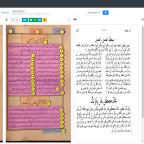
In part 1 of this series, I provided a quick introduction to eScriptorium and the workflow associated with it. This … Continue reading eScriptorium: Digital Text Production for Urdu, Hindi, and Bengali Print, part 2

<strong>The Toyo Bunko Archive: a source of joy and torment</strong>
Buddhist Studies, DH in General, Digitization, New Post, OCR, Online Resources

The Toyo Bunko Archive: a source of joy and torment

As promised previously, in this post I am leading you in a deep dive into a major digital archive I … Continue reading The Toyo Bunko Archive: a source of joy and torment

eScriptorium: Digital Text Production for Urdu, Hindi, and Bengali Print, part 1
DH in Practice, Digitization, HTR, Indian Studies, OCR, Online Resources, Software, South Asian Studies, Workflow

eScriptorium: Digital Text Production for Urdu, Hindi, and Bengali Print, part 1

State-of-the-art OCR engines use trainable models to perform two consecutive tasks that produce machine-actionable transcriptions. They first segment the position … Continue reading eScriptorium: Digital Text Production for Urdu, Hindi, and Bengali Print, part 1

The Japanese Diaspora in Digital Sources: The Hoji Shinbun Digital Collection
DH in General, Japanese Studies, OCR, Online Resources

The Japanese Diaspora in Digital Sources: The Hoji Shinbun Digital Collection

All scholars engaged in the study of the Japanese diaspora can profit from the treasure trove of resources on the … Continue reading The Japanese Diaspora in Digital Sources: The Hoji Shinbun Digital Collection

Practicing Reading Cursive Japanese with Miwo
Japanese Studies, OCR, Software, Teaching

Practicing Reading Cursive Japanese with Miwo

Most people involved in Japanese studies with access to a smartphone or tablet will be aware of the kuzushiji (cursive … Continue reading Practicing Reading Cursive Japanese with Miwo

Introduction to eScriptorium, HTR for Hebrew Manuscripts, part 2
Biblical Studies, DH in Practice, Digitization, OCR, Online Resources, Software, Textual Analysis

Introduction to eScriptorium, HTR for Hebrew Manuscripts, part 2

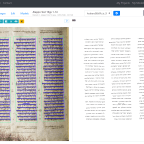
The first part of this post covered starting a project with eScriptorium and properly segmenting a page to prepare it … Continue reading Introduction to eScriptorium, HTR for Hebrew Manuscripts, part 2

Introduction to eScriptorium, HTR for Hebrew Manuscripts, part 1
Biblical Studies, DH in Practice, Digitization, OCR, Online Resources, Software, Textual Analysis

Introduction to eScriptorium, HTR for Hebrew Manuscripts, part 1

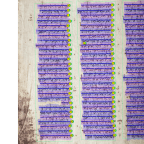
Exegetes interested in textual criticism need ready access to digitized and digitalized versions of Hebrew manuscripts so that they must … Continue reading Introduction to eScriptorium, HTR for Hebrew Manuscripts, part 1

Transkribus and Kirishitanban: Some Initial Experiments
Japanese Studies, OCR, Software

Transkribus and Kirishitanban: Some Initial Experiments

Inspired by a workshop given by Dr. Alex Mallett (Waseda University) that I attended in May last year, I recently … Continue reading Transkribus and Kirishitanban: Some Initial Experiments

The multiple purposes of neural network for the recognition of the ancient Egyptian hieroglyphics complexity
Ancient Egypt, DH in Practice, Digitization, OCR

The multiple purposes of neural network for the recognition of the ancient Egyptian hieroglyphics complexity

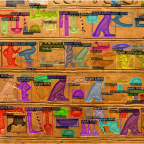
This is a contribution by Andrea Barucci, Constanza Cucci, Massimiliano Franci, Marco Loschiavo and Fabrizio Argenti. For their short bios, … Continue reading The multiple purposes of neural network for the recognition of the ancient Egyptian hieroglyphics complexity

Posts navigation

Older posts
Newer posts
Website Powered by WordPress.com.
The Digital Orientalist
Website Powered by WordPress.com.
  • Subscribe Subscribed
    • The Digital Orientalist
    • Join 334 other subscribers
    • Already have a WordPress.com account? Log in now.
    • The Digital Orientalist
    • Subscribe Subscribed
    • Sign up
    • Log in
    • Report this content
    • View site in Reader
    • Manage subscriptions
    • Collapse this bar
 

Loading Comments...