
Since my last Editor’s Digest back in February, the Northeast Asian Studies team alongside several guest contributors have published an interesting array of contributions on the Digital Orientalist. It isn’t possible to give detailed coverage of each of the 11 contributions published since February, but here I will give a brief run-down of the pieces that the team has produced.
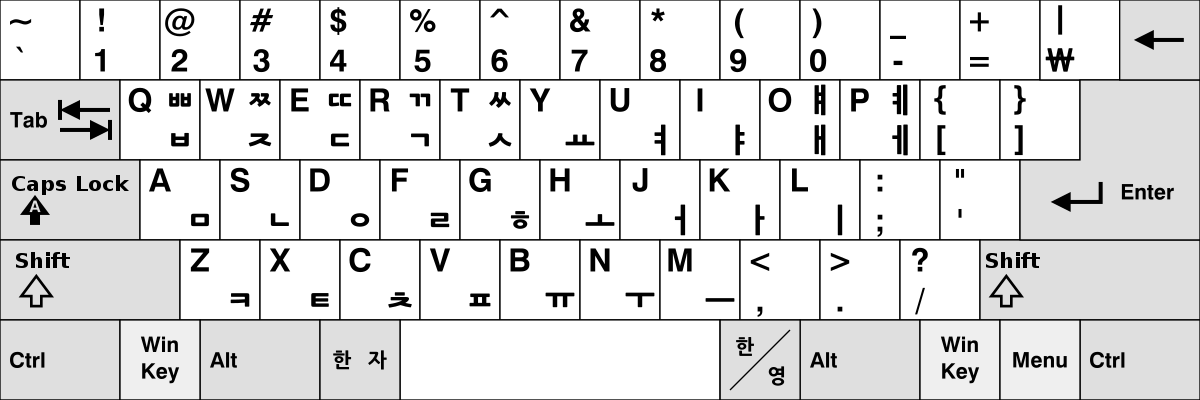
Since guest contributions can easily be easily overlooked, I would like to start by exploring the three guest posts that we have welcomed since February. First is Tomasz Sleziak’s exploration of the issues related to the Romanization and transliteration of Korean. Sleziak introduced different systems of Romanization exploring their limitations particularly in online and academic settings including the mismatch between Romanized forms and native pronunciation, the Anglo-centric nature of Romanization practices, and difficulties associated with displaying Korean text on computers. Two guest contributions focused on education. Joanne Bernardi introduced the tools Mediate, ArcGIS StoryMaps, and Omeka, as part of the preliminary overview of a planned series of posts on Japanese digital humanities in the classroom. Additionally, Virgine Borges de Castilho Sacoman’s recent contribution explored the use of media sources (and anime in particular) in the history classroom.
Whilst on the topic of education, it is perhaps fitting to introduce Brian Wong’s introduction to teaching network analysis. Reflecting on courses taught at the University of Edinburgh, Wong introduces the challenges of teaching network analysis particularly when using sources written in languages that the classroom may not be familiar with. Concrete examples using data from China Biographical Database Project (CBDB) and other sources are also given.
Hirohito Tsuji has contributed three pieces since February. Due to the Digital Orientalist’s long history of publishing on OCR tools and methods for Asian languages and Japanese in particular, I was particularly excited by his exploration of the Komonjo Camera app. Tsuji gives a glowing review of the app and its AI-OCR features, whilst simultaneously outlining larger challenges including an inability to use it outside of Japan and parts of the app’s terms of use. In addition to this post, Tsuji also prepared a piece exploring Japan’s Imperial Household Agency’s Archives and Mausolea Department Catalog and Image Disclosure System which is particularly useful for those conducting research into the Imperial Household, Imperial mausoleums and tombs etc. Tsuji notes the platform’s innovative search functions which allow for the user to traverse different categories. Also linked to the Imperial Household Agency is Tsuji’s most recent post, which explores issues with the organization’s PR and social media strategies.
We have also welcomed two pieces by Emma Donington Kiey including an interview with fashion designer Ana Cordoba Crespo on her involvement in the “Making Fish Skin Pattern-based Garments: Developing Digital Tools for the Fashion Industry Based on Ainu Fish Skin Robes and Japanese Kimono Patterns,”project and the first part of a series exploring TEI. Donington Kiey’s work on the relationship between clothing history and the digital humanities continues to push the Digital Orientalist in new and exciting directions. The interview with Ana Cordoba Crespo explores digital cultural heritage touching on themes of the interface between and combination of traditional craftsmanship and digital technology, as well as providing an introduction to the project and its challenges. Donington Kiey’s contribution on TEI might be seen as a more conventional post and provides a practical example of the use and utility of TEI within a project.
I have also personally contributed two pieces. The first explored The Hiroshi Komiyama Collection, Database of Character Forms, a project collating kana typefaces that is undoubtedly of interest to those interested in the history of printing and in font design. The second built on a post from several years ago returning to the topic of Denshi Jisho (electronic dictionaries) and how I am using one in my work.
With this treasure-trove of posts from the past nine months, I am extremely excited to see what the rest of this academic year holds. One thing I have felt lacking, however, is our lack of consistent publishing within Korean studies. If you or any one you know may be interested in contributing a piece particularly in Korean studies or joining the team, please direct them to our submissions page.

 The Digital Orientalist
One thought on “Editor’s Digest November 2024: Northeast Asian Studies”